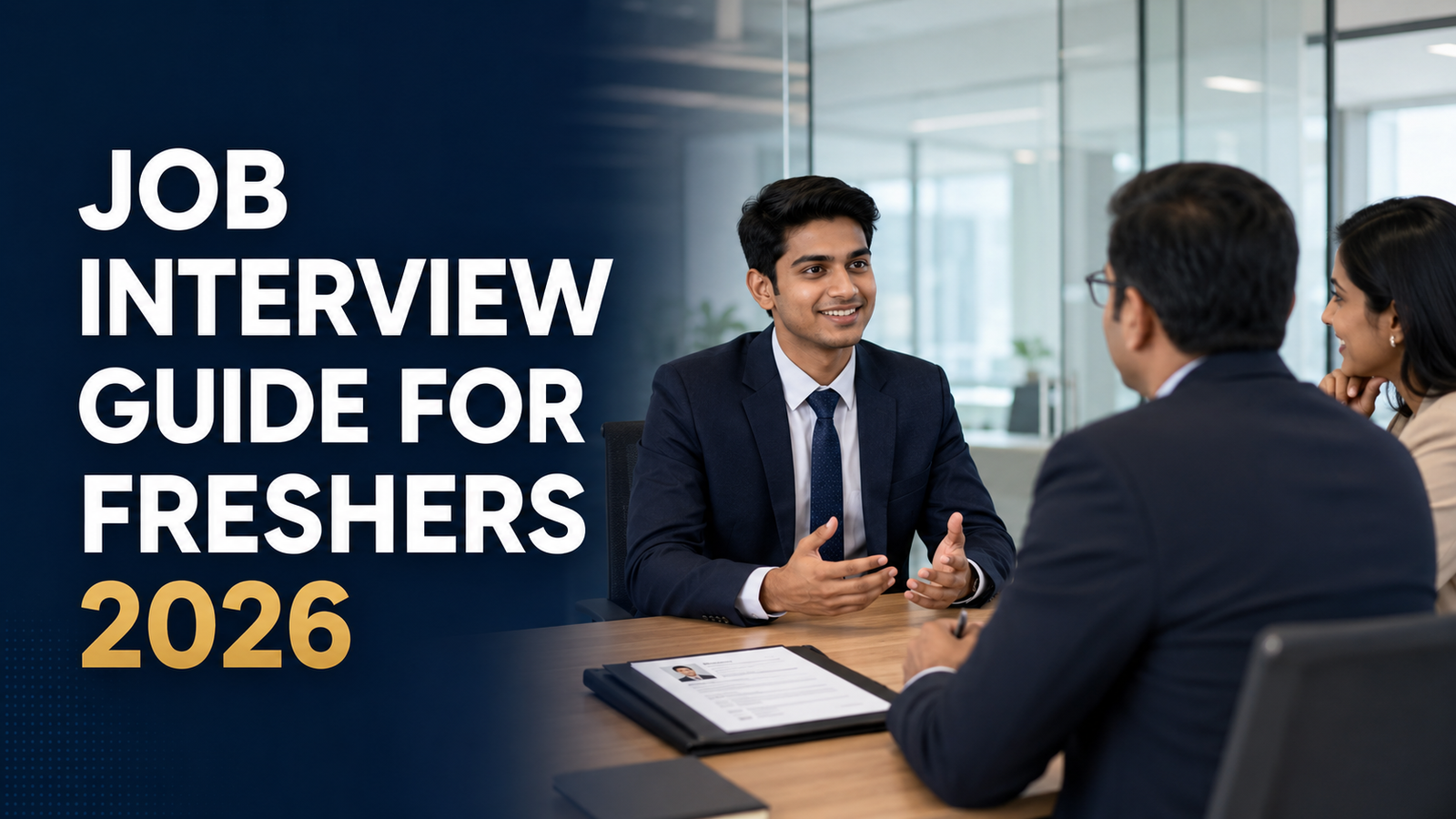
Your first job interview can make you feel nervous. You may worry about the questions, your answers, or the your clothes. But these employers know that freshers do not have much work experience. They usually look for the basic skills, good communication, a positive attitude, and the a desire to learn.
This guide will help freshers prepare for a job interview in 2026.
Why Interview Preparation Is Important for Freshers
Good preparation helps you feel the confident. It also helps you answer questions clearly. It shows the employer that the you are serious about the job.
Preparation helps you:
Understand the job
Talk about your skills
Feel less nervous
Give useful examples
Avoid common mistakes
You do not need to learn every answer word for word. Just understand the main points and the speak naturally.
Research the Company Before the Interview
Visit the official website of the company before your interview. Learn about:
Its products or services
Its goals and values
Its customers
Its latest projects
The department you may join
You can also check the company’s official social media pages. This is the information will help you explain why you want to work there.
Example:
“I want to join your company because this job matches my skills and career goals. I also want to the learn from sa your experienced team.
Make sure your answer matches the company and the job.
Review the Job Description Carefully
Read the full job description. Check the education, duties, technical skills, and the personal skills required for the job.
Make two simple lists:
What the employer wants
What you can offer
As a fresher, you can talk about your skills from:
College projects
Internships
Volunteer work
Presentations
Sports teams
Online courses
Freelance work
Personal projects
Always be honest about your skills. If you only have basic knowledge of a skill, say that you have basic knowledge.
Prepare a 60-Second Self-Introduction
“Tell me about yourself” is a common interview question. Your answer should include:
Your name
Your education
Your main skills
A useful project or achievement
Your career goal
Example:
“My name is Ali. I recently completed my bachelor’s degree in business administration. During my studies, I worked on projects about market research, presentations, and the data analysis. These projects improved my communication, teamwork, and the Microsoft Excel skills. I am now looking for an entry-level job where I can use my knowledge and grow in my career.”
Your introduction should be 45 to 60 seconds long. Practise it aloud, but do not learn every word.
Prepare Answers to Common Interview Questions
Prepare simple answers to common interview questions before the interview.
Why Should We Hire You?
Talk about the skills and the attitude that make you suitable for the job.
Example:
“You should consider me because I have the basic skills needed for the this job. I can communicate clearly, work in a team, and complete my work on time. I am also ready to learn and the accept feedback.”
What Are Your Strengths?
Choose two or three strengths that are useful for the job, such as:
Communication
Teamwork
Time management
Problem-solving
Attention to detail
Willingness to learn
Give a short example to explain your strength.
What Is Your Weakness?
Talk about a real weakness. Also explain what you are doing to improve it.
Example:
“I used to feel nervous during presentations. I started taking part in more class presentations and practising before each one. This helped me become more confident.”
Do not mention a weakness that can stop you from doing the main duties of the job.
Why Do You Want This Job?
Explain how the job matches your education, skills, and career goals. Do not talk only about the salary.
Where Do You See Yourself in Five Years?
Show that you want to the learn, improve your skills, and take more responsibility.
Example:
“In five years, I want to have good knowledge of this field. I also want to take more responsibility by giving good performance.”
Use the STAR Method for Interview Answers
The STAR method helps you answer questions about your past experience.
STAR means:
Situation: What happened?
Task: What was your duty?
Action: What did you do?
Result: What was the result?
Example:
“During my final semester, four students had to prepare a research presentation. I made the a schedule, divided the work, and planned practice sessions. We completed is the project on time and received good feedback.”
Prepare STAR examples about:
Working in a team
Solving a problem
Completing work on the time
Working under pressure
Learning from a mistake
Always give real examples.
Prepare Your Interview Documents
Keep all your documents in a clean folder. You may need:
Copies of your resume
Education certificates
Identification documents
Internship certificates
Portfolio or work samples
Notepad and pen
For an online interview, keep digital copies of your resume and portfolio ready. Use a professional file name, such as the Ali-Khan-Resume.pdf.
Do not give your bank details, passwords, money, or the private documents before checking that the company and job are the real.
Dress Professionally for the Interview
Wear clean, neat, and properly fitted clothes. You do not need to buy an expensive suit.
Choose:
Simple and professional colours
Clean shoes
A neat hairstyle
Few accessories
Light perfume, if needed
Do not wear very casual clothes. If you do not know the company’s dress code, wear slightly formal clothes.
Practise Positive Body Language
Your body language is also important during an interview.
Remember to:
Sit straight
Keep your shoulders relaxed
Make natural eye contact
Smile when needed
Listen carefully
Do not interrupt
Keep your hands calm
Speak clearly
If you need time to think, take the a short pause before answering.
Prepare for an Online Interview
Before an online interview:
Test your internet connection
Check your camera and microphone
Charge your device
Sit in a quiet place
Keep the background clean
Put the camera at eye level
Turn off notifications
Join a few minutes early
Look at the camera while a speaking. Keep your resume near you, but do not read full answers from the screen.
Keep your phone charged in case you have an internet or device problem.
Arrive on Time
For an in-person interview, check is the route before the interview day. Try to arrive 10 to 15 minutes early.
For an online interview, join about five minutes early.
If you are late because of an emergency, contact the recruiter quickly. Give a short and honest reason.
Answer Questions Clearly and Honestly
Listen to the full question before the answering. If you do not understand the question, politely ask the interviewer to repeat it.
Give a clear and the simple answer. Stay focused on the question. Do not make your answer too long.
If you do not know something, you can say:
“I have not used that tool before, but I understand its basic purpose and I am willing to learn it.”
Never give false information. Do not speak badly about your university, teacher, old supervisor, or former employer.
Ask Smart Questions at the End
The interviewer may ask if you have any questions. You can ask:
What training do you provide to the new employees?
What are the main duties of the this job?
How do you check employee performance?
What skills are most important for this job?
What is the next step in the hiring process?
Do not ask only about salary, holidays, or promotions during the first interview. You can discuss these things if the interviewer starts the topic.
Send a Thank-You Email
Send a short thank-you email within 24 hours of the interview.
Subject: Thank You for the Interview
Dear [Interviewer’s Name],
Thank you for speaking with a me about the [Job Title] position. I enjoyed learning about the job and your team. I am interested in this opportunity. I believe my skills and the willingness to learn can help me do well in this position.
Thank you for your time.
Kind regards,
[Your Name]
Do not send many messages if the recruiter has already told you when they will give their decision.
Common Interview Mistakes Freshers Should Avoid
Avoid these common mistakes:
Arriving late
Not learning about the company
Giving fully memorised answers
Talking for too long
Interrupting the interviewer
Checking your phone
Giving false information
Wearing unsuitable clothes
Knowing nothing about the job
Asking only about salary
Showing no interest
Sending too many follow-up messages
Read your resume before the interview. Be ready to explain every skill, project, qualification, and date written in it.
Final Job Interview Preparation Checklist
Before your interview, make sure you have:
Researched the company
Read the job description
Prepared your introduction
Practised common questions
Prepared STAR examples
Selected professional clothes
Organised your documents
Tested your internet or checked your route
Prepared questions for the interviewer
Frequently Asked Questions
How should a fresher prepare for a job interview?
Learn about the company, read the job description, prepare a short introduction, practise common questions, and organise your documents.
How can I answer questions without work experience?
Use examples from the college projects, internships, volunteer work, presentations, sports, online courses, or the personal projects.
How long should my self-introduction be?
Your self-introduction should be between 45 and 60 seconds.
What should I bring to the an interview?
Bring copies of your resume, required certificates, identification, a portfolio if needed, a notepad, and the a pen.
What is the STAR method?
The STAR method helps you explain an the experience using Situation, Task, Action, and Result.
Should I ask about salary in my first interview?
You can discuss salary if the interviewer starts the topic. Otherwise, first focus on the job and hiring process.
How can I control interview nervousness?
Prepare well, practise aloud, arrive early, breathe slowly, and the take a short pause before answering.
When should I send a thank-you email?
Send a short thank-you email within 24 hours after the interview.
Conclusion
Your first interview is a chance to thr show your skills, attitude, and willingness to learn. Employers understand that is a freshers may not have much work experience.
Learn about the company and the understand the job. Prepare simple examples and practise your introduction. Wear professional clothes, arrive on time, and the give honest answers.
You may not get the a job offer after the every interview. But every interview can help you improve your skills and confidence. Learn from each experience and the prepare better for the your next interview.