

Hygge Meets Minimalism: How to Create a Warm and Clutter-Free Home
We’ve all been there—scrolling through feeds of perfectly white, empty rooms that look more like a museum than a home. It feels cold, doesn’t it? But then there’s the other extreme: the ‘cozy’ home that’s actually just a collection of stuff we don’t need, gathering dust in every corner. For years, I felt like I had to choose between the breathability of minimalism and the soul-soothing warmth of hygge. I wanted the clean lines, but I also wanted to sink into a soft sofa with a hot cup of tea without feeling like I was ruining the aesthetic.
That’s when I discovered the magic of Cozy Minimalism. It’s not about having nothing; it’s about having enough of the right things. It’s a philosophy that prioritizes comfort and intentionality over sheer quantity. By focusing on light, texture, and mindful organization, you can create a sanctuary that feels both incredibly spacious and deeply nurturing. Today, I’m sharing my favorite ways to bridge these two worlds, turning your living space into a serene, tactile haven that invites you to breathe deeply and stay a while.
How to Style a Cozy Minimalist Living Room for Maximum Natural Light

Why we love this
Natural light is the ultimate mood-lifter; it has a way of making even the smallest room feel like a vast, open cathedral. When sunlight streams through a clean window, hitting a pale wood floor or a soft linen sofa, it creates a dance of shadows and warmth that no artificial bulb can replicate. There is a specific scent to a sun-drenched room—a mix of warmth and fresh air—and the way the golden hour glow settles on your skin while you read is the purest form of home-based luxury.
Essential Elements:
- Sheer linen or cotton curtains
- Large, strategically placed wall mirrors
- Reflective surfaces like glass or polished stone
- Low-profile furniture to avoid blocking window views
- Light-reflective paint in off-white or soft cream
How to make it
- Begin by clearing the ‘light path.’ Ensure no tall bookshelves or bulky armchairs are flanking the windows, as these cast heavy shadows that shrink the room.
- Install curtain rods at least 6-10 inches wider than the window frame itself. This allows you to pull the curtains completely away from the glass during the day, maximizing the visible pane.
- Choose a ‘cool’ white paint for south-facing rooms to balance the intense yellow sun, or a ‘warm’ white for north-facing rooms to prevent a gray, sterile look.
- Mount a large mirror directly opposite your primary light source. Tilt the top of the mirror slightly downward to bounce the light toward the floor, brightening the entire lower half of the room.
- Keep window glass pristine. Use a mixture of distilled water and vinegar to remove film, ensuring the light passing through is crisp and unobstructed.
How to Design a Small Living Room Ideas Apartment Cozy Aesthetic for Spacious Living

Why we love this
Small apartments often get a bad rap for being ‘cramped,’ but they are actually the perfect canvas for the hygge aesthetic because intimacy is built right into the architecture. There is something incredibly grounding about a space where everything is within reach, provided it is curated with intention. The goal here is to create a ‘hug’ of a room—where the walls feel like they are protecting you rather than closing in on you, achieved through smart scaling and soft, rounded edges.
Essential Elements:
- Multi-functional furniture (storage ottomans, nest tables)
- Legged furniture to show more floor space
- Vertical shelving units
- Light-colored area rugs to define zones
- Transparent accents like acrylic chairs or glass coffee tables
How to make it
- Apply the ‘Rule of Scale.’ Instead of a full-sized sofa, opt for an apartment-scale loveseat with slim arms. This preserves seating capacity while freeing up precious inches of visual ‘breathing room.’
- Elevate your furniture. Choose pieces with tapered wooden legs rather than blocky bases; seeing the floor continue under the furniture tricks the eye into perceiving more square footage.
- Utilize vertical real estate. Install floating shelves that reach toward the ceiling, drawing the eye upward and creating a sense of height that compensates for a narrow footprint.
- Create ‘zones’ using rugs. A low-pile jute rug can anchor the seating area, signaling to the brain that this is a distinct, cozy nook separate from the kitchen or entryway.
- Select a monochrome color palette. Using varying shades of the same color (like oatmeal, sand, and taupe) prevents visual ‘stuttering’ and makes the boundaries of the room feel limitless.
How to Select Minimalist Room Decor for a Tactile Sensory Experience

Why we love this
In a minimalist home, since there is less to look at, the things you *can* touch become infinitely more important. This is where the ‘hygge’ really lives—in the grain of a raw oak table, the cool weight of a ceramic mug, or the nubby texture of a wool throw. A tactile home engages the senses, making the environment feel rich and expensive without needing a single piece of clutter. It’s about the physical sensation of peace under your fingertips.
Essential Elements:
- Natural wood with visible grain
- Handmade stoneware and ceramics
- Woven seagrass or wicker baskets
- Matte metal accents (brass or black steel)
- Organic fabrics like hemp, wool, and linen
How to make it
- Audit your surfaces. Replace cold, plastic-veneered items with solid materials. Even a small change, like switching a plastic tray for a carved wooden one, adds immediate warmth.
- Incorporate ‘high-low’ textures. Pair a smooth, polished marble coaster with a rough, unglazed ceramic vase. The contrast creates a ‘sensory map’ that makes the room feel curated and thoughtful.
- Choose ‘living’ finishes. Opt for unlacquered brass or copper that will develop a patina over time; this adds a sense of history and ‘soul’ to a minimalist space.
- Focus on the ‘Touchpoints.’ Identify the things you touch most—cabinet handles, light switches, faucet levers—and upgrade them to high-quality, weighted materials that feel satisfying to use.
- Layer your soft goods. Instead of one thick blanket, use a thin linen sheet topped with a chunky knit wool throw to provide a variety of weights and sensations.
How to Achieve a Minimalist Cozy Vibe for the Perfect Evening Atmosphere
Why we love this
The evening is when the ‘hygge’ philosophy truly shines. As the sun sets, the minimalist home transforms from a bright gallery into a glowing sanctuary. The absence of clutter means there are no piles of paper or unwashed dishes to catch the eye in the dim light, allowing you to fully focus on the flicker of a candle or the soft pool of light from a reading lamp. It’s about creating a ‘soft landing’ at the end of a chaotic day.
Essential Elements:
- Warm-toned LED bulbs (2700K or lower)
- Floor lamps with fabric shades
- Scented candles with wood wicks
- Dimmable switches or smart bulbs
- Battery-operated fairy lights in glass cloches
How to make it
- Eliminate ‘The Big Light.’ Never use the overhead ceiling fixture in the evening. Instead, create ‘islands of light’ using 3-4 lamps placed at different heights throughout the room.
- Set the color temperature. Use bulbs labeled ‘Extra Warm White.’ The goal is to mimic the golden hue of firelight, which signals the brain to produce melatonin and relax.
- Incorporate scent as decor. Place a candle on a stone plinth. Choose scents like cedarwood, vanilla, or tobacco—earthy, grounding aromas that complement the minimalist aesthetic.
- Manage your ‘Blue Light.’ Designate a wooden box for all remote controls and phones. Putting technology out of sight immediately lowers the room’s ‘digital noise.’
- Use reflective low-lights. Place a small tea light in front of a window or mirror to double the flame’s visual impact, creating a rhythmic, calming flicker.
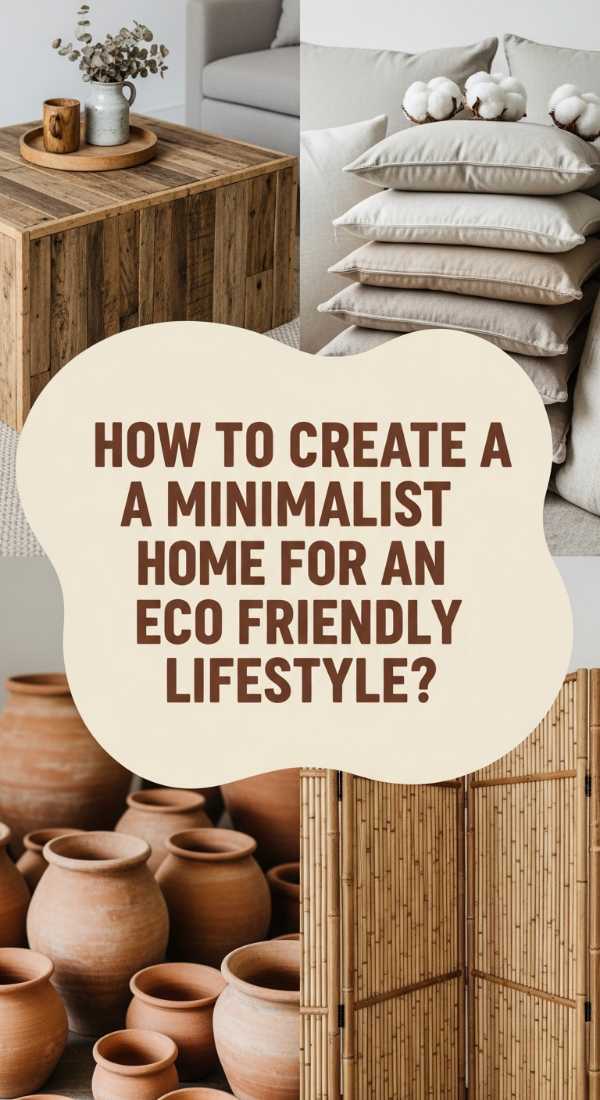
How to Create a Minimalist Home for an Eco Friendly Lifestyle

Why we love this
Minimalism and sustainability are two sides of the same coin. By choosing fewer, better things, you naturally reduce your environmental footprint. An eco-friendly minimalist home feels ‘clean’ in a moral sense—it’s free of the guilt of fast-furniture and disposable decor. There is a profound peace that comes from knowing your home is built from materials that will eventually return to the earth, rather than sitting in a landfill for centuries.
Essential Elements:
- Furniture made from FSC-certified wood
- Recycled glass decor
- Natural latex or wool-filled cushions
- Organic cotton textiles
- Vintage or upcycled accent pieces
How to make it
- Practice the ’30-Day Rule.’ Before adding any new piece to your home, wait 30 days. This prevents impulse buys of ‘trendy’ items that are often poorly made and unsustainable.
- Shop ‘Second-Hand First.’ Search for high-quality vintage pieces. A mid-century teak sideboard has more character and longevity than a modern flat-pack equivalent.
- Look for ‘Invisible’ Quality. Check for mortise-and-tenon joinery rather than glue and staples. Quality construction is a pillar of both minimalism (longevity) and eco-friendliness (less waste).
- Choose natural fibers for all textiles. Synthetic fibers like polyester shed microplastics in the wash. Stick to linen, hemp, and organic cotton which age beautifully and breathe better.
- Incorporate indoor air-purifying plants. Instead of chemical air fresheners, use living greenery to filter the air, adding a lush, vibrant energy to the minimalist landscape.
How to Curate Living Room Decor Minimalist Style for an Indoor Oasis

Why we love this
Biophilic design—the practice of bringing the outdoors in—is the bridge between clinical minimalism and a soulful home. Plants add movement, organic shapes, and a sense of life that static furniture simply cannot. In a minimalist room, a single, large Fiddle Leaf Fig or an architectural Snake Plant becomes a living piece of art. It’s about creating a space that feels like a clearing in a forest: quiet, fresh, and restorative.
Essential Elements:
- Large-scale statement plants (Monstera, Olive Tree)
- Terracotta or clay planters
- Natural stone coasters or bookends
- Botanical prints in simple frames
- Water features or tabletop fountains
How to make it
- Go for ‘Scale over Quantity.’ One six-foot-tall tree in a corner creates a much stronger minimalist impact than twelve tiny succulents scattered across every surface.
- Coordinate your vessels. Use planters in a consistent color palette (e.g., all matte white or all raw terracotta) to keep the look cohesive and avoid visual ‘chatter.’
- Position plants near light reflectors. Place a leafy plant near a mirror or a white wall so its shadows become part of the decor, dancing as the sun moves.
- Use natural mulch. Cover the soil in your pots with smooth river stones or preserved moss. This hides the ‘dirt’ and adds another layer of texture to the room.
- Curate your ‘View.’ If you have a window looking out at greenery, treat it like a painting. Keep the surrounding wall completely bare to ‘frame’ the outdoor oasis.
How to Organize a Minimalist Living Room Small Spaces for Clutter Free Peace
Why we love this
True hygge is impossible in a mess. You can’t truly relax when your brain is subconsciously processing a ‘to-do list’ of clutter. Organizing a small space isn’t just about hiding things; it’s about creating a ‘home’ for every object so that tidying becomes an effortless, rhythmic habit. When the surfaces are clear, the mind follows suit, allowing you to focus on the person you’re with or the book you’re reading.
Essential Elements:
- Closed-cabinet storage units
- Uniform baskets for ‘catch-all’ spots
- Drawer dividers for small electronics
- Wall-mounted racks for frequently used items
- The ‘One-In, One-Out’ rule
How to make it
- Implement ‘Invisible Storage.’ Choose a coffee table with hidden drawers or a bench that opens up. This allows you to stow away blankets and remotes without adding furniture.
- The ‘Daily Reset’ habit. Spend 5 minutes every evening returning everything to its designated spot. Minimalist spaces are easy to clean, so this should never feel like a chore.
- Group like with like. Even inside a cabinet, organize items into clear bins. Knowing exactly where the ‘extra candles’ are prevents the frantic searching that ruins a calm mood.
- Declutter the ‘Flat Surfaces.’ Keep dining tables and side tables 75% empty. Only one or two intentional items (like a vase or a candle) should remain.
- Digitize where possible. Replace a bulky DVD or CD collection with digital versions, freeing up entire shelves for more aesthetic, ‘hygge’ items like books or art.
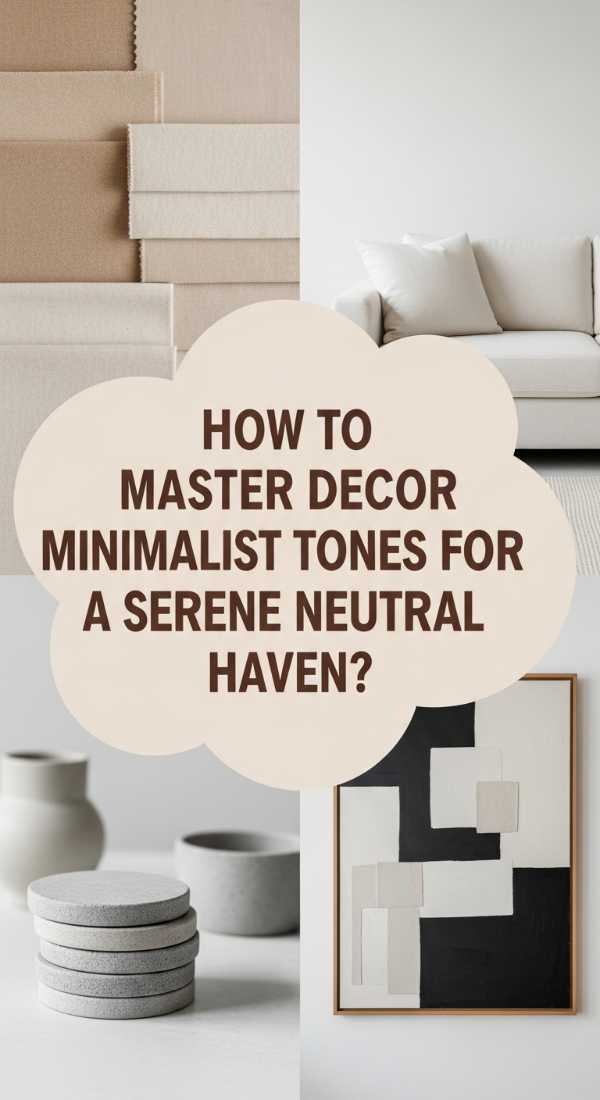
How to Master Decor Minimalist Tones for a Serene Neutral Haven

Why we love this
A neutral palette is the ultimate ‘visual exhale.’ When you walk into a room composed of creams, beiges, and soft grays, your nervous system immediately begins to downshift. But the secret to a ‘Serene Haven’ (and not a ‘Boring Box’) is the subtle variation in those tones. It’s like a desert landscape or a cloudy sky—there is depth and movement within the stillness, providing a sophisticated backdrop for a peaceful life.
Essential Elements:
- A base of ‘Warm White’ (avoid stark hospital blue-whites)
- Accents in ‘Oatmeal’ or ‘Sand’
- Darker ‘Earth Tones’ for grounding (charcoal or deep espresso)
- Matte finishes rather than high-gloss
- Tonal layering in textiles
How to make it
- Follow the 60-30-10 Rule. Use a main neutral (like cream) for 60% of the room, a secondary tone (like soft taupe) for 30%, and a deep accent (like charcoal) for 10%.
- Identify ‘Undertones.’ Ensure all your neutrals share the same base (warm vs. cool). Mixing a pink-toned beige with a green-toned gray creates visual ‘mud.’
- Add ‘Black Accents’ to ground the space. A thin black picture frame or a black metal lamp prevents a neutral room from looking like it’s ‘floating’ or washed out.
- Use paint with a ‘Suede’ or ‘Chalky’ finish. These absorb light rather than reflecting it, creating a soft, velvety look on the walls that feels incredibly cozy.
- Introduce pattern through weave, not print. A herringbone-weave blanket in the same color as the sofa adds interest without the ‘loudness’ of a floral or geometric print.
How to Choose Room Decor Minimalist Art for an Inspired Creative Space

Why we love this
In a minimalist home, art isn’t just decoration; it’s a focal point for contemplation. It serves as a visual ‘breather.’ Instead of a gallery wall of twenty small frames that compete for your attention, a single, large-scale piece allows the eye to rest and the mind to wander. Art in a hygge-minimalist home should feel personal and evocative—something that sparks a memory or a feeling of calm every time you pass it.
Essential Elements:
- Large-scale abstract paintings
- Line drawings or minimalist sketches
- Over-sized wooden or metal frames
- High-quality matting with plenty of ‘white space’
- Textured wall hangings (like fiber art)
How to make it
- Go ‘Oversized.’ A common mistake is hanging art that is too small for the wall. Choose a piece that covers at least 50-60% of the wall space above a sofa to create a sense of grandeur.
- Embrace ‘Negative Space.’ Look for art where the subject doesn’t fill the entire canvas. The ’empty’ space in the art mimics the ’empty’ space in your home, creating harmony.
- Use ‘Floating Frames.’ A canvas that appears to float within its frame looks modern and high-end, adding a layer of architectural interest without bulk.
- Consider ‘Unframed’ Textures. A large, woven textile or a framed piece of handmade paper offers a soft, tactile alternative to traditional glass-fronted art.
- Hang at ‘Eye Level.’ Ensure the center of the piece is exactly 57-60 inches from the floor. This creates a psychological connection with the viewer and feels more ‘settled.’
How to Layer Cozy Minimalist Textures for a Luxurious Lounge Feeling
[IMAGE_10]
Why we love this
This is the ‘final flourish’ of the cozy minimalist home. Layering is what makes a room feel ‘finished’ and ‘luxe’ rather than just ’empty.’ It’s the difference between a hotel room and a home. When you layer textures correctly, you create a physical environment that beckons you to sit down, take your shoes off, and stay for hours. It’s about creating a ‘nest’ that is as visually clean as it is physically indulgent.
Essential Elements:
- Linen sofa covers
- Faux-fur or sheepskin throws
- Chunky-knit wool blankets
- Velvet or silk accent pillows
- Jute or high-pile wool rugs
How to make it
- The ‘Rule of Three.’ Layer three different textures in one area—for example, a leather chair, a wool throw, and a linen pillow. This creates immediate visual and physical depth.
- Contrast the ‘Weights.’ Pair a light, airy linen curtain with a heavy, substantial wool rug. The interplay between ‘heavy’ and ‘light’ materials makes the room feel balanced.
- Focus on the ‘Drape.’ When placing a throw blanket, don’t fold it perfectly. Draping it loosely over the arm of a chair adds a ‘lived-in’ hygge softness that balances minimalist lines.
- Mix your ‘Pillow Profiles.’ Use two large 24-inch pillows as a ‘base’ and one smaller 18-inch pillow in a different texture (like velvet) in front. This creates a plush, inviting look.
- Engage the floor. Layer a smaller, soft sheepskin rug on top of a larger, flat-weave jute rug. This provides a soft spot for your feet while keeping the overall aesthetic grounded and natural.
Creating Your Minimalist Sanctuary
Building a home that reflects both your need for order and your desire for comfort is a journey, not a weekend project. It’s about the slow curation of items that truly speak to you and the brave removal of things that no longer serve your peace. Remember, a minimalist home isn’t finished when there is nothing left to add, but when there is nothing left to take away that would diminish your joy. By focusing on light, texture, and intention, you aren’t just decorating a room; you are designing a life that is lighter, warmer, and infinitely more beautiful. Happy styling!