

Have you ever walked into a room and felt like you could finally, truly exhale? Not because it was empty, but because every single thing in it felt like a soft hug for your soul? For years, I thought ‘minimalism’ meant cold white walls and uncomfortable metal chairs, but I’ve discovered a secret: the magic happens in the middle. It’s that sweet spot where clean lines meet chunky knit blankets, and where the absence of clutter makes room for the presence of peace.
Creating a cozy minimalist home isn’t about deprivation; it’s about curation. It’s about choosing the candle that smells like a rainy Sunday morning and the rug that feels like clouds under your toes, while letting go of the ‘extra’ that just gathers dust. Today, I’m sharing how we can transform our living spaces into sanctuaries that breathe, giving us the mental clarity we crave and the warmth we deserve.
How to Style a Small Living Room for Maximum Comfort
Why we love this
There is something incredibly intimate about a small living room when it is styled with intention. We love this approach because it challenges the idea that more space equals more happiness. Instead, it focuses on the tactile joy of a perfectly placed velvet ottoman, the gentle scent of beeswax candles flickering on a wooden tray, and the way a soft, oversized throw draped over a slim-profile sofa invites you to curl up with a book for hours on end.
Essential Elements:
- Low-profile modular sofa
- Multi-functional nesting tables
- Sheer linen floor-to-ceiling curtains
- A neutral-toned plush area rug
- Wall-mounted ambient sconces
How to make it
- Measure your floor plan precisely, leaving at least 18 inches of ‘walking breathability’ between furniture pieces to avoid a cramped sensation.
- Select a focal point, usually the seating area, and orient your largest piece (the sofa) against the longest wall or floating slightly away from it to create depth.
- Layer in your ‘softs’—place a rug that is large enough for all furniture legs to rest upon, which visually expands the floor plane and adds immediate acoustic dampening.
- Utilize vertical space by hanging curtains higher than the window frame; this draws the eye upward, creating an airy, vaulted feeling even in tiny apartments.
- Finalize the flow by adding a single, high-quality accent piece, like a sculptural floor lamp, which provides a warm glow without occupying the visual ‘weight’ of a heavy table lamp.
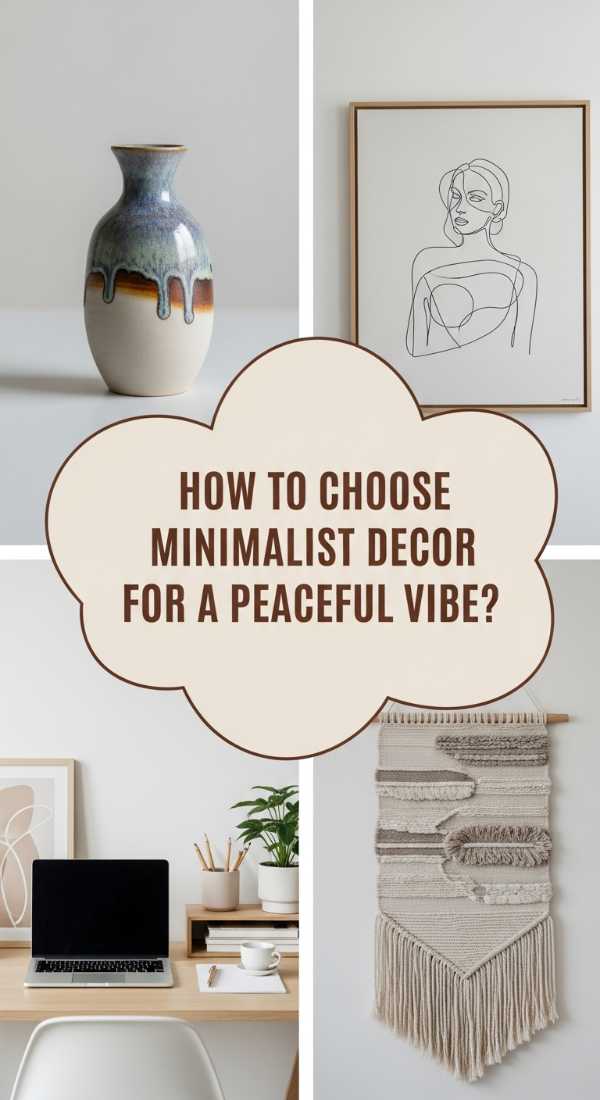
How to Choose Minimalist Room Decor for a Peaceful Vibe

Why we love this
This style of decorating is like a deep breath for your eyes. We love it because it eliminates the ‘visual noise’ that often causes subconscious stress. Imagine walking into a room where every object—from the smooth ceramic vase to the single sprig of dried eucalyptus—feels like it has its own place to shine. The air feels lighter, the colors are soft and muted, and the overall atmosphere is one of profound, hushed serenity that lets your mind finally rest.
Essential Elements:
- Matte ceramic vessels in earthy tones
- Framed line art or abstract sketches
- Hand-poured soy candles
- Wooden decorative bowls
- Textured stone coasters
How to make it
- Conduct a ‘visual audit’ by removing every decorative item from your surfaces and placing them in a box; start with a completely blank canvas.
- Choose only three items per surface (like a mantle or coffee table) using the ‘rule of three’ to create a balanced, asymmetrical triangle of heights.
- Select pieces with matte finishes rather than high-gloss; matte surfaces absorb light softly rather than reflecting it harshly, which contributes to a calmer vibe.
- Incorporate natural materials like raw wood or unpolished stone to bring an organic, grounded element into the room’s energy.
- Spacing is key: ensure there is ‘negative space’ (empty area) around each object so the eye can appreciate the form and texture of each individual piece without feeling overwhelmed.
How to Create a Cozy Minimalist Haven for Relaxing Afternoons

Why we love this
We love this because it turns an ordinary corner into a destination for restoration. It’s the ultimate expression of ‘slow living’—a dedicated spot where the texture of a waffle-knit pillow meets the warmth of a steaming cup of tea. It’s about creating a sensory experience where the world outside fades away, replaced by the soft rustle of pages turning and the comforting weight of a weighted blanket that feels like a gentle reassurance.
Essential Elements:
- A deep-seated armchair or chaise
- A small wooden side table for tea
- A thick, chunky knit throw blanket
- Dimmable warm-toned lighting
- A signature room mist (lavender or sandalwood)
- Soft floor cushions
How to make it
- Identify the quietest corner of your home, preferably near a window for soft natural light, and clear out any work-related clutter or electronics.
- Position your primary seating at a 45-degree angle to the corner to create an inviting ‘nook’ feeling that feels psychologically protective and cozy.
- Layer your textures: start with a base cushion, add a lumbar pillow for physical support, and finish with a heavy-weight throw draped over the arm.
- Set the mood using scent and sound; light a candle with a wooden wick for a crackling fireplace effect and use a linen spray on your textiles.
- Keep a ‘haven basket’ nearby filled with non-digital entertainment like journals, books, or knitting supplies to ensure the space remains a tech-free zone.
How to Arrange Living Room Decor for a Minimalist Serenity

Why we love this
The arrangement is the invisible hand that guides how we feel in a room. We love a serene minimalist layout because it prioritizes movement and openness. There’s a rhythmic balance to it—the way a low coffee table sits perfectly centered on a rug, or how a single large plant provides a burst of life without crowding the furniture. It’s about creating ‘breathing room’ for both your body and your thoughts.
Essential Elements:
- Clear walking paths (minimum 36 inches)
- Symmetrical or balanced furniture groupings
- Low-profile coffee table
- Hidden storage solutions
- A single statement art piece
How to make it
- Start by positioning your largest piece of furniture (the sofa) facing the main entrance or the most pleasing view to create an ‘open’ and welcoming gesture.
- Apply the ‘breathing room’ rule: ensure no furniture piece is touching another unless they are designed to be nested; this creates a sense of lightness and intentionality.
- Balance the visual weight of the room; if you have a heavy sofa on one side, place two lighter armchairs or a large floor plant on the opposite side to prevent the room from feeling ’tilted.’
- Keep the center of the room open; a low-profile coffee table should be the only anchor, allowing the floor to be visible around it to maximize the sense of space.
- Use ‘hidden storage’ like ottomans with lids to tuck away remotes and magazines, keeping the visible surfaces entirely clear of everyday clutter.
How to Curate an Apartment Living Room for Cozy Aesthetic Living

Why we love this
Apartment living often feels transient, but we love this curation process because it turns a ‘rental’ into a ‘home’ using soul-filling details. It’s about the aesthetic of the ‘lived-in’ minimalist—where every item has a story. The smell of fresh coffee brewing, the soft glow of a salt lamp in the corner, and the mix of modern lines with vintage textures create a space that feels curated over time, rather than bought from a showroom.
Essential Elements:
- A mix of vintage and modern pieces
- Natural fiber rugs (jute or wool)
- Framed personal photography in black and white
- Potted indoor trees (like a Fiddle Leaf Fig)
- Woven storage baskets
How to make it
- Select a ‘hero’ piece of furniture that reflects your personality, such as a mid-century modern credenza, and build the rest of the room around its aesthetic.
- Introduce ‘life’ through greenery; place a tall plant in an empty corner to soften the sharp angles of apartment walls and add a vibrant, organic energy.
- Personalize the space without cluttering by using a cohesive color palette for all frames and decorative objects, which unifies diverse items into one ‘story.’
- Swap out standard apartment lighting for warm-toned LED bulbs (2700K temperature) to instantly eliminate the clinical feel of overhead fluorescent lights.
- Layer a smaller, soft rug over a larger jute rug; this ‘double layering’ technique adds luxury and sound-proofing, which is essential for apartment tranquility.
How to Master Minimalist Cozy Colors for a Warm Home

Why we love this
Color is the emotional foundation of a home. We love a warm minimalist palette because it avoids the starkness of ‘hospital white’ in favor of creamy oats, soft taupes, and muted terracottas. These colors wrap around you like a cashmere sweater, absorbing the light and creating a soft, golden-hour glow even on the grayest of winter days. It is the art of using color to create a constant state of afternoon sun.
Essential Elements:
- Creamy off-white wall paint
- Accents in sage green or warm ochre
- Light-toned wood furniture (oak or maple)
- Brass or copper hardware
- Beige and sand-colored textiles
How to make it
- Choose a ‘primary neutral’ (like a warm white with yellow or pink undertones) to cover 60% of the room, providing a soft, non-reflective base.
- Select two ‘secondary tones’ from the same color family—for example, a light tan and a deeper mocha—to apply to furniture and rugs for subtle depth.
- Incorporate 10% ‘accent color’ through small items like pillows or art; choose earth-derived tones like terracotta or forest green to maintain the minimalist vibe.
- Check your colors under different lighting; apply paint swatches to several walls and observe how the warmth shifts from morning to night to ensure it never feels ‘muddy.’
- Avoid pure black; instead, use charcoal or deep walnut wood for contrast, which provides the same grounding effect but with a much softer, more organic edge.
How to Select Minimalist Home Essentials for a Clutter Free Life

Why we love this
We love this approach because it shifts the focus from ‘quantity’ to ‘quality.’ There is a deep satisfaction in owning one perfect ceramic mug that fits your hand just right, or a single high-quality linen apron that lasts a lifetime. It’s about the tactile pleasure of using beautiful tools for everyday tasks, turning the mundane—like sweeping the floor or making tea—into a mindful ritual of appreciation for the things you own.
Essential Elements:
- High-quality linen napkins
- Handmade ceramic dinnerware
- Glass storage jars with bamboo lids
- Solid wood cutting boards
- Natural fiber cleaning brushes
How to make it
- Practice the ‘one in, one out’ rule: for every new essential you bring into your home, donate or recycle an old one to maintain a constant volume of belongings.
- Choose items based on the ‘sensory test’: hold the object and ensure its weight, texture, and function bring you a small spark of joy or a sense of utility.
- Eliminate plastic packaging by decanting pantry staples and soaps into glass or ceramic dispensers; this removes visual ‘commercial noise’ from your counters.
- Invest in ‘lifetime’ materials like cast iron, solid wood, and linen, which age beautifully and develop a patina over time rather than breaking and needing replacement.
- Organize your essentials so that everything has a ‘home’ within arm’s reach of where it is used, minimizing the friction of daily chores.
How to Incorporate Greenery for a Minimalist Room Refresh

Why we love this
Plants are the soul of a minimalist home. We love them because they bring a literal breath of fresh air and a vibrant, changing energy to a static room. The sight of a new leaf unfurling or the way the sun filters through a translucent fern frond adds a layer of ‘living decor’ that no static object can match. It’s a way to stay connected to nature’s rhythms while tucked safely inside your cozy sanctuary.
Essential Elements:
- Snake plants or ZZ plants for low maintenance
- A large Olive tree or Fiddle Leaf Fig for a focal point
- Terracotta or cement planters
- Hanging macrame planters for vertical interest
- A sleek watering can as a decor piece
How to make it
- Assess your light levels: place high-light plants like succulents on south-facing windowsills and low-light plants like Pothos in darker corners or bathrooms.
- Group plants in odd numbers (groups of 3 or 5) and vary their heights using plant stands to create a mini ‘indoor jungle’ that feels intentional rather than cluttered.
- Use consistent planter materials—all white ceramic or all terracotta—to unify the greenery and keep the focus on the plants themselves rather than the pots.
- Wipe the leaves regularly with a damp cloth; this ensures the plant can ‘breathe’ and keeps the green colors looking vibrant and dust-free.
- Integrate one ‘statement plant’ that stands at least 4 feet tall to act as a natural piece of sculpture in an empty corner, instantly softening the architecture of the room.
How to Use Lighting for a Cozy Minimalist Glow

Why we love this
Lighting is the ‘mood setter’ of the home. We love the minimalist approach to lighting because it avoids the ‘interrogation room’ feel of bright overheads. Instead, it relies on pools of warm, honey-colored light that create soft shadows and intimate zones. It’s the difference between a house that feels like an office and a home that feels like a candlelit dinner—every evening becomes a special occasion for relaxation.
Essential Elements:
- Warm-toned LED bulbs (2200K – 2700K)
- Dimmable floor lamps with fabric shades
- String lights or ‘fairy lights’ for soft accents
- Votive candles in frosted glass
- Smart plugs for automated evening ‘sunset’ modes
How to make it
- Layer your lighting by ensuring you have three sources in every room: ‘task’ (for reading), ‘ambient’ (for general light), and ‘accent’ (for mood).
- Switch off all overhead lights after 6:00 PM; rely solely on lamps placed at eye level or lower to signal to your brain that it is time to wind down.
- Use fabric or rice paper shades; these materials diffuse the light evenly, eliminating harsh glares and creating a soft, ethereal glow throughout the space.
- Place a small lamp in an unexpected place, like a kitchen counter or a bookshelf, to create a ‘glow pocket’ that makes the room feel larger and more magical.
- Install dimmer switches or use smart bulbs to slowly transition the brightness levels as the night progresses, mimicking the natural setting of the sun.
How to Layer Textures for a Minimalist Living Room Upgrade
[IMAGE_10]
Why we love this
Texture is what prevents minimalism from feeling ‘flat’ or boring. We love this technique because it adds richness and complexity using only touch and sight. Think of the contrast between a smooth leather sofa and a rough-hewn wooden stool, or the way a silk pillow sits against a coarse wool rug. It creates a ‘tactile playground’ that invites you to reach out and touch your surroundings, making the home feel deeply human and incredibly inviting.
Essential Elements:
- Bouclé or velvet throw pillows
- Raw silk or linen cushion covers
- A sheepskin (or faux) rug
- Woven rattan or wicker accents
- Chunky knit or waffle-weave blankets
How to make it
- Start with a ‘smooth’ base, like a leather or tight-weave fabric sofa, which provides a clean and structured starting point.
- Add a ‘rough’ or ‘organic’ element, such as a jute rug or a carved wood side table, to provide immediate visual and tactile contrast.
- Layer ‘softness’ on top: add at least three different fabric textures (e.g., one linen, one velvet, one knit) to your seating area to create a sense of luxury.
- Mix your metals and minerals; combine a matte black metal lamp with a soft marble tray to add ‘cool’ and ‘hard’ textures that balance out the soft textiles.
- Keep the colors similar while varying the textures; this allows you to pile on layers without the room looking busy, maintaining that clean minimalist aesthetic.
Conclusion: Embracing the Soul of Your Home
In the end, a cozy minimalist home isn’t just about how it looks on a social media feed—it’s about how it makes you feel when you close the door after a long day. It’s the peace of knowing you are surrounded only by what you love and need. By focusing on quality, texture, and light, you aren’t just decorating; you are creating a sanctuary for your soul to rest and recharge. Start small, let go of what no longer serves you, and watch as your home begins to breathe again.