

Welcome to Your Sanctuary
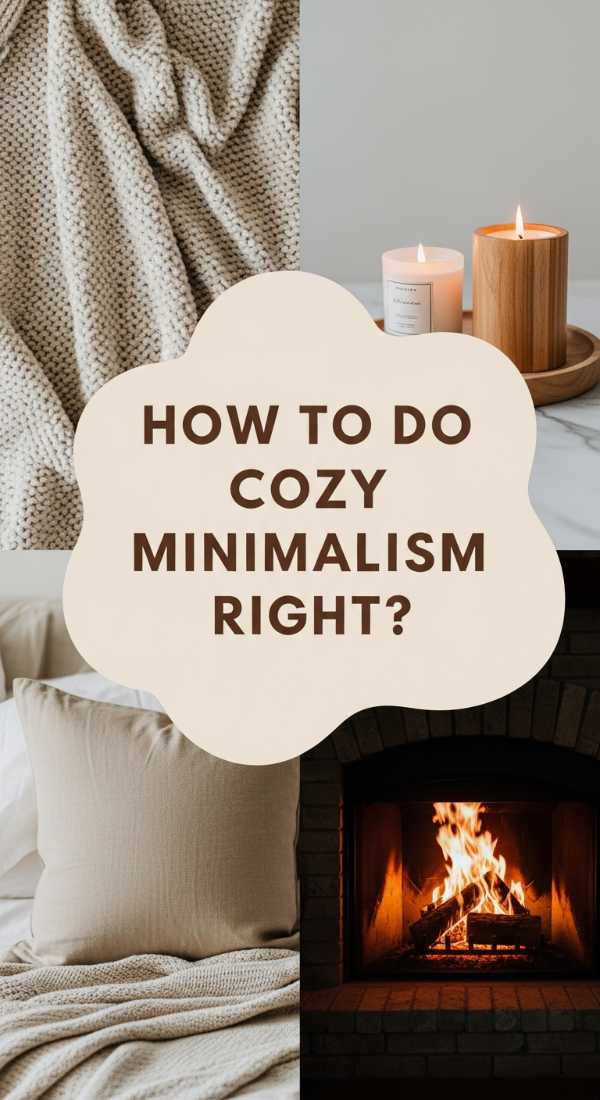
Imagine walking through your front door and feeling an immediate wave of relief wash over you—the kind of sigh-inducing calm that only comes from a space that truly breathes. For years, we were told that minimalism meant cold, empty white boxes and uncomfortable furniture, but the ‘Cozy Minimalist’ movement has changed the game. It’s about the intersection of visual silence and tactile luxury, where every object has a purpose and every texture invites you to stay a little longer.
Creating a home that feels both curated and comfortable is an art form. It’s about stripping away the noise of the outside world so you can focus on the moments that matter: the steam rising from your morning coffee, the softness of a chunky knit throw against your skin, and the way the afternoon sun hits a single ceramic vase. In this guide, we are diving deep into how you can master this aesthetic, transforming your living space into a high-vibe retreat that balances clean lines with a warm, human heart.
How to Design a Small Apartment for Maximum Cozy Aesthetic

Why we love this
There is something incredibly intimate about a small space that has been intentionally curated to feel like a warm hug. When you prioritize cozy minimalism in a compact footprint, you notice the gentle scent of a beeswax candle lingering in the air and the way a plush, cream-colored rug softens the sound of your footsteps. It transforms a cramped feeling into a cocoon-like embrace, where the lack of clutter allows the beauty of a single velvet pillow or a polished wooden coffee table to truly shine through the natural light.
Essential Elements:
- Multi-functional furniture with exposed legs to create visual floor space
- Large-scale mirrors to bounce light and add depth
- A consistent neutral color palette (creams, sands, and soft greys)
- Sheer linen curtains that blur the outside world
- Strategic greenery like a tall, slender Olive tree
How to make it
- Conduct a ‘Visual Audit’ by clearing everything out of your main living area to see the bare bones of the architecture and identify natural light paths.
- Measure your square footage and select ‘Hero Pieces’ that serve dual purposes, such as an ottoman with hidden storage or a drop-leaf dining table.
- Install mirrors opposite your largest windows at eye level; this technique effectively doubles your perceived space and maximizes the ‘golden hour’ glow.
- Layer your textiles starting with the largest surface area—usually the rug—ensuring it is large enough to tuck under the front legs of all furniture to ‘anchor’ the room.
- Apply the ‘One-In, One-Out’ rule strictly for the first month to ensure your small footprint remains breathable and free of visual friction.
How to Create a Minimalist Home for Effortless Flow

Why we love this
An effortless flow in a home feels like a deep, rhythmic breath. It’s the sensation of moving from the kitchen to the living room without snagging your sleeve on a corner or navigating an obstacle course of ‘stuff.’ You begin to appreciate the negative space—the empty corners that allow the architecture to speak and the way the air seems to circulate more freely. This flow creates a psychological lightness, making your daily routines feel less like chores and more like a graceful dance through your own private gallery.
Essential Elements:
- Clear walking paths at least 36 inches wide
- Low-profile furniture that doesn’t block sightlines
- Unified flooring throughout the entire home
- Hidden storage solutions for everyday clutter
- Minimalist transitions (no heavy rugs between rooms)
How to make it
- Sketch a floor plan of your home and draw ‘traffic lines’ showing how you naturally move from room to room during a typical morning.
- Identify ‘Choke Points’ where furniture encroaches on these paths and reposition or remove pieces that force you to shimmy or turn sideways.
- Maintain a ‘Level Horizon’ by ensuring your furniture heights are relatively consistent, which allows the eye to travel across the room without jagged interruptions.
- Standardize your storage by using identical woven baskets or matte bins inside closets and cabinets, reducing the ‘mental load’ of searching for items.
- Finish by ‘Editing the Corners’; remove 50% of the decor currently sitting in the corners of your rooms to create ‘breathing pockets’ that enhance the sense of flow.
How to Style a Minimalist Living Room for Total Serenity

Why we love this
A serene living room is the ultimate antidote to a chaotic digital life. When you sit down on a low-slung, linen-wrapped sofa, the world outside simply disappears. We love the tactile contrast of a raw stone side table against the softness of a wool boucle armchair—it feels grounded, earthy, and permanent. The lack of visual ‘noise’ from excessive knick-knacks allows your mind to settle, focusing instead on the gentle flicker of a fireplace or the subtle grain patterns in a reclaimed wood mantle.
Essential Elements:
- A neutral, textured sofa (linen or heavy cotton)
- One large-scale piece of abstract art with a muted palette
- Natural wood elements (oak, walnut, or pine)
- A high-pile rug in a solid, earthy tone
- Matte ceramic vases in organic shapes
How to make it
- Start with your ‘Anchor Piece,’ the sofa, and position it facing the room’s most calming feature—usually a window or a fireplace rather than the television.
- Introduce ‘Tactile Contrast’ by pairing a smooth leather chair with a chunky wool throw; the tension between textures provides interest without needing color.
- Group your decor in ‘Clusters of Three,’ using objects of varying heights (e.g., a tall vase, a medium candle, and a small tray) to create a balanced, curated look.
- Cull your bookshelves so that only your favorite titles remain, and arrange them by spine color or turn the pages outward for a more monochromatic, quiet look.
- Set the ‘Serenity Tone’ by adding a single high-quality diffuser with essential oils like cedarwood or sandalwood to engage the olfactory senses.
How to Curate a Minimalist Room for Inner Calm

Why we love this
There is a specific kind of magic in a room designed for inner calm—it feels like a physical manifestation of a meditation session. We love the way soft, diffused light catches on a textured plaster wall, creating shadows that shift slowly throughout the day. It’s a space where you can hear your own thoughts, where the cool touch of a marble surface or the warmth of a woven jute rug provides a sensory grounding that pulls you out of your head and back into your body.
Essential Elements:
- Monochromatic color schemes (tonal variations of one color)
- Natural fibers like hemp, silk, and organic cotton
- Dimmable lighting options
- A ‘Zero-Tech’ zone (no screens or blinking lights)
- Simple, organic window treatments
How to make it
- Choose a base ‘Calm Color’ (like soft sage or warm oatmeal) and apply it to the walls, then find decor in three shades lighter and three shades darker of that same hue.
- Switch out all bright white LED bulbs for ‘Warm White’ (2700K) bulbs to eliminate the harsh blue light that triggers the ‘fight or flight’ response.
- Introduce ‘Living Elements’ such as a bowl of smooth river stones or a single branch in a tall glass jar to bring the grounding energy of nature indoors.
- Hide all visible power cords and chargers using cable management boxes; visual ‘cord clutter’ is a major hidden source of environmental stress.
- Dedicate one corner to a ‘Stillness Station’ consisting of just a floor cushion and a small table, keeping this area permanently free of any ‘to-do’ items.
How to Organize Small Spaces for a Breathable Lifestyle
Why we love this
Organization in a minimalist home isn’t about hiding things; it’s about giving your life room to breathe. We love the satisfying ‘click’ of a magnetic cabinet or the sight of a perfectly decanted pantry where everything is visible and accessible. It removes the friction of daily existence. When your small space is organized with a minimalist heart, you no longer feel ‘owned’ by your possessions—instead, you feel a sense of mastery and clarity that spills over into your work and relationships.
Essential Elements:
- Uniform glass jars and containers
- Label-free surfaces for a ‘clean’ look
- Vertical shelving that reaches the ceiling
- Under-bed storage bins on rollers
- Pegboards for aesthetic utility storage
How to make it
- Empty your most cluttered drawer entirely and only put back the items you have used in the last 30 days; donate or discard the rest without hesitation.
- Utilize ‘Vertical Real Estate’ by installing floating shelves above door frames or high on walls to store items you only need occasionally.
- Decant all dry goods and cleaning supplies into uniform glass or BPA-free plastic containers, removing the visual chaos of commercial branding and logos.
- Apply the ‘Two-Minute Rule’: if an organizing task takes less than two minutes (like hanging up a coat), do it immediately to prevent clutter ‘piles’ from forming.
- Use ‘Zone Lighting’ inside dark cabinets or closets with battery-operated puck lights, ensuring you can see every inch of your organized space.
How to Master Cozy Minimalism for a Warm Welcome

Why we love this
First impressions are everything, and a cozy minimalist entryway says, ‘You are safe here, and you can let your guard down.’ We love the smell of a fresh eucalyptus sprig hanging by the door and the soft glow of a low-wattage lamp welcoming you home at dusk. It’s about creating a transition zone that bridges the gap between the loud, hectic outside world and the quiet, intentional life you’ve built inside your four walls.
Essential Elements:
- A slim console table with clean lines
- A textural ‘landing pad’ (a small woven rug or mat)
- A dedicated ceramic bowl for keys and essentials
- A wall-mounted coat rack with only 2-3 ‘active’ items
- A high-quality room spray or candle
How to make it
- Clear the ‘Threshold’ by removing any shoes or bags that have accumulated near the door, keeping only one pair of daily shoes visible on a discrete tray.
- Select a console table that is proportionate to your hallway; a glass or acrylic table can provide a surface without taking up visual ‘weight.’
- Place a ‘Scent Anchor’ near the entry—a high-end reed diffuser or a bowl of dried lavender—to create an immediate sensory shift upon entering.
- Hang a single, oversized piece of art or a round mirror above the console to create a focal point that draws the eye away from any utility areas.
- Incorporate a ‘Soft Element’ like a small upholstered bench or a sheepskin throw draped over a chair to signal comfort the moment the door opens.
How to Select Minimalist Decor for an Artful Touch

Why we love this
Artful minimalism is about choosing ‘the few’ over ‘the many.’ We love the way a single, hand-crafted ceramic bowl can hold more visual power than a shelf full of mass-produced items. It’s about the story behind the object—the thumbprint of the potter or the grain of the hand-carved wood. When you curate with an artful eye, your home becomes a reflection of your soul, filled with pieces that provoke thought and offer a quiet, sophisticated beauty that never feels cluttered.
Essential Elements:
- Handmade ceramics with wabi-sabi imperfections
- Framed textile art or linen canvases
- Sculptural furniture pieces (like a wishbone chair)
- Single-stem floral arrangements
- Books used as decorative pedestals
How to make it
- Curate a ‘Collection of One’—instead of a gallery wall, choose one large, meaningful piece of art and give it an entire wall to breathe.
- Look for ‘Organic Geometry’ in your decor; choose items that have soft, rounded edges rather than sharp, industrial corners to maintain a cozy vibe.
- Use ‘Negative Space’ as a design tool; leave at least 30% of your shelf and tabletop surfaces completely empty to highlight the items you *do* choose to display.
- Incorporate ‘Found Objects’ like a piece of driftwood or a unique stone from a favorite beach, which adds an artful, personal touch for zero cost.
- Switch to ‘Hidden Tech’ by using framed TVs or hiding speakers inside decorative boxes, ensuring that technology doesn’t compete with your artful decor.
How to Light an Apartment for a Soft Aesthetic Glow

Why we love this
Lighting is the ‘secret sauce’ of cozy minimalism. It’s the difference between a room that feels like a sterile hospital and one that feels like a sun-drenched sanctuary. We love the way ‘pools of light’ create depth and drama, drawing you into specific areas of a room. Soft, warm lighting mimics the glow of a sunset or a crackling fire, triggering the body’s natural relaxation response and making every surface—from a linen sofa to a wooden floor—look richer and more inviting.
Essential Elements:
- Warm-toned bulbs (2700K – 3000K)
- Dimmers on every main light switch
- Layered lighting (Ambient, Task, and Accent)
- Frosted glass or fabric lampshades
- Candles and battery-operated tea lights
How to make it
- Banish ‘The Big Light’—avoid using overhead ceiling lights as your primary source; instead, place at least three lamps at varying heights around each room.
- Install ‘Accent Lighting’ behind plants or large pieces of furniture to create a soft, backlit silhouette that adds incredible depth to the space.
- Use ‘Task Lighting’ like a brass floor lamp next to a reading chair to create a ‘zone’ of focus without illuminating the entire room.
- Incorporate ‘Reflective Surfaces’ like a metallic tray or a glass vase near light sources to gently amplify the glow throughout the evening.
- Swap out standard switches for smart dimmers, allowing you to program ‘scenarios’ that automatically soften the light as the sun goes down.
How to Layer Minimalist Textures for Ultimate Comfort

Why we love this
Layering is how we prevent minimalism from feeling ‘flat.’ We love the physical sensation of sinking into a bed layered with stone-washed linen, a chunky knit wool blanket, and soft cotton pillows. It’s a feast for the skin. By keeping the colors neutral but varying the textures, you create a sophisticated complexity that feels incredibly high-end. It’s the difference between a house and a home—the layers provide the warmth, the sound-dampening, and the sheer ‘snuggle-ability’ we all crave.
Essential Elements:
- Chunky knit throws
- Linen duvet covers and pillowcases
- Boucle or velvet accent cushions
- Woven jute or sisal rugs
- Smooth wood and matte metal accents
How to make it
- Start with a ‘Base Texture’—this should be your largest surface, like a smooth cotton sofa or a flat-weave rug.
- Apply the ‘Rule of Three Textures’: for every smooth surface, add one rough texture (like a woven basket) and one soft texture (like a faux-fur throw).
- Drape blankets ‘Intentionally Messy’—don’t fold them perfectly; instead, let them fall naturally over the corner of a chair to invite people to use them.
- Mix your ‘Sheens’ by pairing matte-finished walls with a slightly glossy ceramic lamp or a metallic tray to create visual ‘pops’ of interest.
- Introduce ‘Natural Imperfections’ like a raw-edge wooden coffee table to break up the clean lines of a modern room and add a ‘human’ element.
How to Balance a Minimalist Room for Harmonious Living
[IMAGE_10]
Why we love this
Balance is the silent hero of a cozy home. When a room is balanced, you feel a sense of ‘rightness’ the moment you walk in. We love the harmony of a symmetrical layout that feels stable and grounded, or an asymmetrical arrangement that feels artistic and dynamic. It’s about distributing the ‘visual weight’ so that no single part of the room feels heavy or overwhelming. A balanced room creates a balanced mind, providing a stable foundation for your most creative and restful moments.
Essential Elements:
- Symmetrical furniture layouts
- A clear focal point (art, window, or fireplace)
- Consistent ‘negative space’ throughout the room
- Balanced ‘visual weight’ (e.g., a heavy sofa balanced by two light chairs)
- A unified color story
How to make it
- Identify your ‘Focal Point’ and arrange your largest furniture pieces in a way that supports and points toward that central feature.
- Use the ‘Rule of Thirds’—place your most important decor items at the intersections of an imaginary 3×3 grid over your walls or tabletops for natural balance.
- Check the ‘Visual Weight’ of your room; if one side has a heavy wooden cabinet, balance the other side with a large plant or a floor lamp and a substantial chair.
- Ensure ‘Height Harmony’ by avoiding a ‘mountain range’ of furniture; try to keep the tops of your various pieces within a similar 12-18 inch vertical zone.
- Take a photo of your room from the doorway; looking at a 2D image helps you spot ‘holes’ or ‘clumped’ areas that your eyes might miss in 3D.
The Art of Living Well
Cozy minimalism isn’t a destination; it’s a practice. It is the daily choice to value quality over quantity, to choose the texture of a hand-woven rug over the clutter of a dozen knick-knacks, and to prioritize your own peace of mind. As you implement these changes, remember that your home is a living, breathing reflection of you. It’s okay to take your time, to let a corner sit empty until the ‘perfect’ piece finds you, and to adjust the lighting until it feels just right. Your sanctuary is waiting—go ahead and create the space you deserve.