

Have you ever walked into a room and felt an immediate sense of relief, like the walls were giving you a gentle, warm hug? That’s the magic of the Scandi-inspired home—a delicate dance between the ‘less is more’ philosophy and the ‘more is better’ feeling of total comfort. For the longest time, I thought I had to choose between being a minimalist or being cozy, but then I discovered the world of Scandi design, where the heart finds its stillness and the soul finds its fire.
Designing your space isn’t just about furniture; it’s about curated peace. It’s about that specific feeling when you come home after a long day, light a single beeswax candle, and feel the day’s stress evaporate into the ether. It’s the smell of fresh cedar, the touch of raw linen, and the sight of a room that breathes with you. Today, I’m sharing how you can transform your own home into a minimalist sanctuary that feels anything but cold.
How to Design a Cozy Minimalist Living Room for Ultimate Serenity
Why we love this
There is an ethereal quality to a room that balances the starkness of minimalism with the velvet-soft touch of hygge. Imagine sinking into a cloud-like linen sofa, the air smelling faintly of vanilla and dried eucalyptus, while the afternoon sun dances across the smooth, pale grain of an oak coffee table. It’s about the tactile contrast—the coolness of a ceramic vase against the fuzzy warmth of a chunky knit throw—that creates a sanctuary where your heart rate slows and your soul finds its rhythm. Every breath feels lighter in a space where nothing is extra, yet everything feels indulgent and carefully chosen for your peace.
Essential Elements:
- Neutral color palette (oatmeal, stone, and soft white).
- Natural wood accents (oak, ash, or birch).
- High-quality textiles (wool, linen, and organic cotton).
- A single statement plant (like a Fiddle Leaf Fig or Olive Tree).
- Scented elements (sandalwood or cedarwood candles).
How to make it
- Clear the Canvas: Strip the room of all small decor. Observe the natural light levels for 24 hours to identify where shadows ‘pool’ in the corners.
- Ground the Foundation: Place your largest furniture piece, ideally a neutral-toned sofa, against the longest wall but pulled away 3-4 inches to allow the ‘walls to breathe.’
- Layer the Base Temperature: Add a large area rug in an oatmeal or cream shade. Ensure the rug is large enough that all furniture legs rest upon it, which anchors the ‘visual heat’ of the room.
- Adjust the Texture Contrast: Drape one high-quality textile (wool or boucle) over the sofa. The visual cue for success is a ‘relaxed drape’—not perfectly folded, but looking effortlessly tossed.
- Final Curation: Select exactly three decorative objects of varying heights to place on the coffee table. Stop when the arrangement feels balanced but not crowded; you should see more table surface than object surface.
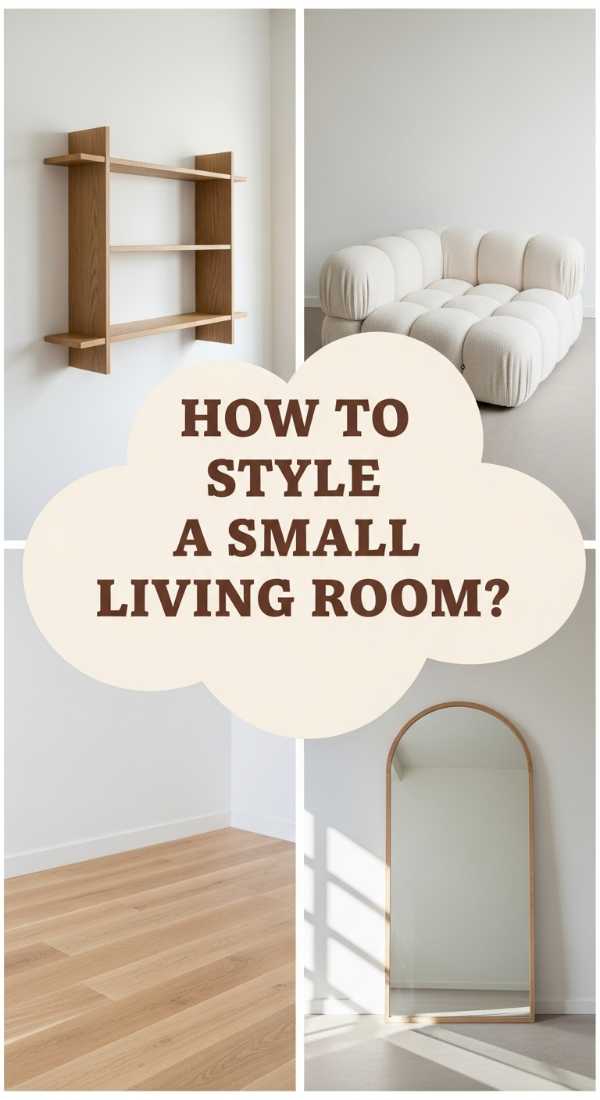
How to Style a Small Living Room for a Spacious Aesthetic
Why we love this
Small spaces have a bad reputation for feeling cramped, but when styled with a minimalist eye, they become the most intimate and intentional corners of the home. We love the challenge of turning a compact footprint into a cathedral of calm where every square inch serves a purpose without overwhelming the eye. There is a specific joy in the ‘airiness’ of a small room—the way light bounces off a well-placed mirror or the way a slim-legged chair makes the floor seem to extend forever. It feels like a secret garden, a private alcove where the world can’t reach you.
Essential Elements:
- Wall-mounted shelving units.
- Leggy furniture (avoiding solid bases).
- Large-scale mirrors.
- Transparent materials (glass or acrylic).
- A monochromatic color scheme.
How to make it
- Raise the Gaze: Mount shelves near the ceiling. This draws the eye upward, creating a visual ‘stretch’ that makes the room feel taller.
- Select ‘Leggy’ Anchors: Choose a sofa and chairs with exposed wooden or metal legs. Seeing the floor continue under the furniture trick the brain into perceiving more square footage.
- Position the Mirror: Place a large mirror directly opposite your main window. This ‘doubles’ the light source and provides a false window effect.
- Unify the Palette: Use shades that are within 2 degrees of each other on the color wheel. This lack of contrast prevents the eye from ‘stopping’ at edges, making the room feel limitless.
- Cull the Clutter: If an item hasn’t been used in a week, remove it. Visual silence is the most powerful tool in a small room.
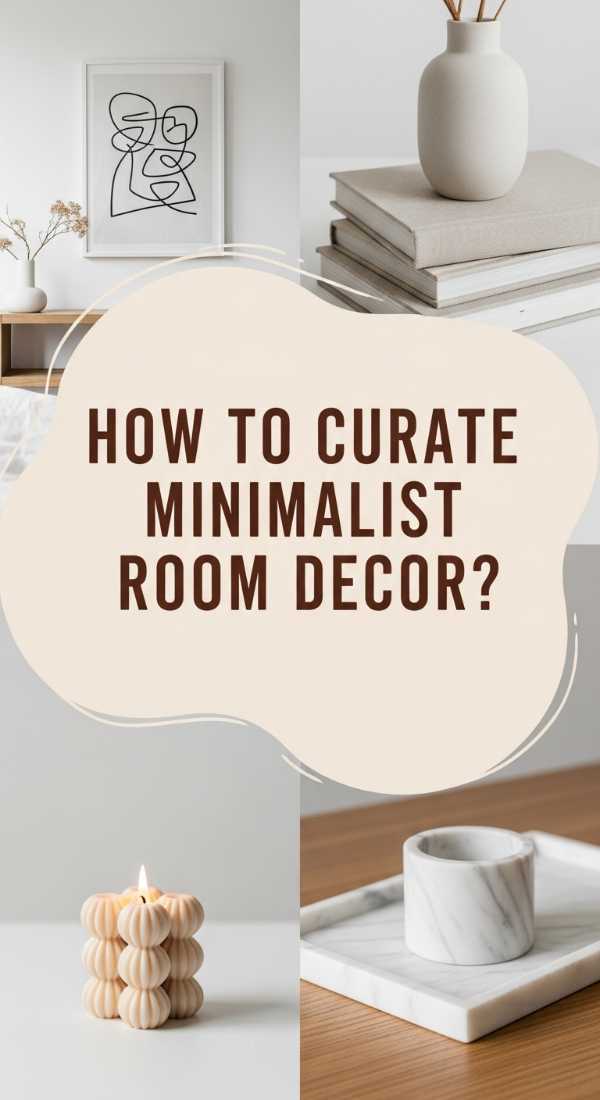
How to Curate Minimalist Room Decor for an Effortless Vibe

Why we love this
The ‘effortless vibe’ is actually the most intentional style of all, focusing on the beauty of the individual object rather than the noise of many. We love this because it honors craftsmanship; it’s about a single, hand-thrown ceramic bowl that feels cool to the touch and holds memories of a local artisan. When you curate rather than decorate, your home becomes a gallery of your life, filled with items that have weight, history, and soul. It’s the visual equivalent of a deep, slow exhale, where every item on the shelf has earned its right to be there through beauty or utility.
Essential Elements:
- Hand-crafted ceramics.
- Framed line art or minimalist photography.
- Dried botanicals (pampas grass or eucalyptus).
- Woven baskets for hidden storage.
- A curated stack of linen-bound books.
How to make it
- The ‘Rule of One’: For every surface (mantel, shelf, table), choose only one focal point. This creates a ‘simmering’ visual effect that isn’t overwhelming.
- Texture Check: Touch every item. If it feels plastic or ‘cheap,’ swap it for something natural like stone, wood, or clay to elevate the sensory ‘heat’ of the room.
- Group by Color, Not Type: Arrange your curated items in small clusters of similar tones. This creates a cohesive look that feels like a professional installation.
- Negative Space Planning: Ensure at least 40% of every surface is left completely empty. This ‘white space’ is the secret to the effortless look.
- Rotate Seasonally: Every three months, swap your decor. This prevents ‘clutter blindness’ and keeps the energy of the room fresh and vibrant.
How to Master a Cozy Minimalist Home for a Warm Welcome

Why we love this
Entering a home that masters this balance is like feeling the sun on your face during a brisk autumn walk—it is crisp, clean, and deeply comforting. We love the ‘warm welcome’ because it sets the emotional tone for everyone who crosses the threshold, whispering that they can leave their burdens at the door. It’s the scent of a wood-burning candle mixed with the softness of a sheepskin rug underfoot. It’s a home that says, ‘I am organized, but I am lived in,’ providing a structure that supports life rather than one that demands constant maintenance.
Essential Elements:
- Soft, warm-toned ambient lighting.
- A functional yet beautiful entryway bench.
- Natural fiber doormats.
- Hooks for intentional coat storage.
- Soft background music (low acoustic or lofi).
How to make it
- Define the Entry: Place a simple wooden bench near the door. This creates a ‘decompression zone’ where the transition from outside to inside happens physically.
- Layer the Lighting: Avoid overhead lights. Use floor lamps with warm-spectrum bulbs (2700K) to create ‘pools’ of light that guide the guest inward.
- Address the Senses: Use a reed diffuser with notes of pine or sea salt near the entrance. The olfactory greeting is the first step in the ‘warm welcome’ process.
- Clear the Path: Ensure the walkway into the main living area is completely unobstructed. A clear path translates to a clear mind.
- Add a Soft Landing: Place a high-texture rug or runner in the hallway. The change in floor texture signals to the brain that it is time to relax.
How to Elevate Living Room Decor for a Minimalist Lifestyle

Why we love this
Elevating a space means moving away from the ‘disposable’ and moving toward the ‘timeless.’ We love this approach because it turns your living room into a sophisticated retreat that grows more beautiful with age. Think of the patina on a vintage leather chair or the way a brass lamp develops a soft glow over time. It’s an investment in your daily happiness, surrounding yourself with materials that feel honest and substantial. An elevated minimalist lifestyle isn’t about having nothing; it’s about having the *best* version of what you truly need.
Essential Elements:
- High-end materials (marble, brass, leather).
- Architectural lighting fixtures.
- Custom-fitted window treatments.
- Large-scale original art.
- Solid wood furniture pieces.
How to make it
- Identify the Hero: Choose one ‘hero’ piece (like a designer chair or a marble coffee table) and build the rest of the room around it with subservient, simpler items.
- Refine the Palette: Move from three colors to two, using different shades and textures of those two colors to create depth without visual noise.
- Perfect the Scale: Use fewer, larger items rather than many small ones. A single massive painting has more ‘gravitas’ than a gallery wall of ten small prints.
- Internalize Storage: Move all visible electronics and cords into closed cabinets. The visual absence of technology immediately elevates the ‘purity’ of the design.
- Polish the Details: Replace standard plastic switch plates with brass or wood. These small ‘touch points’ are the secret cues of a high-end minimalist home.
How to Arrange an Apartment Living Room for Cozy Minimalist Comfort

Why we love this
Apartment living often requires a clever use of space, and the cozy minimalist arrangement turns these constraints into cozy advantages. We love the ‘nesting’ feeling of a perfectly arranged apartment, where every corner feels like a purposeful destination. It’s about creating ‘zones’—a corner for reading, a space for gathering, and a spot for quiet reflection. When done correctly, even a studio apartment can feel like a sprawling suite, filled with the warmth of soft textiles and the clarity of a smart, open layout.
Essential Elements:
- Multi-functional furniture (ottomans with storage).
- Room dividers (slat wood or open shelving).
- Floor pillows and poufs.
- Cohesive rug placement to define zones.
- Vertical herb gardens or greenery.
- Zone with Textiles: Use different rugs to separate the ‘dining’ area from the ‘lounging’ area. This creates ‘invisible walls’ that organize the space.
- The 60-30-10 Rule: Use 60% of your primary color, 30% of a secondary texture, and 10% for a subtle accent color to keep the small space from feeling chaotic.
- Float the Furniture: Do not push all furniture against the walls. Pulling the sofa into the center of the room creates a ‘flow’ that makes the apartment feel larger.
- Maximized Corners: Place a tall, slim floor lamp in a dark corner to ‘push’ the walls out visually and create a cozy reading nook.
- Scale Down: Choose furniture that is 15% smaller than ‘standard’ sizes to ensure there is plenty of room for movement, which is the key to comfort.
- Chunky knit wool throws.
- Velvet or linen throw pillows.
- Jute or sisal base rugs.
- Smooth ceramic or stone surfaces.
- Faux fur or sheepskin accents.
- Start from the Bottom: Layer a soft, plush rug over a flat-weave jute rug. This ‘doubling up’ provides instant visual and physical depth.
- Mix the ‘Weaves’: When selecting pillows, mix a smooth linen with a heavy, chunky knit. The ‘visual friction’ between the two creates interest without needing color.
- The Rule of Three Textures: Every ‘vignette’ in your room should have three distinct textures (e.g., wood, fabric, metal) to feel complete.
- Focus on Drape: Place your throws on the edge of chairs with a heavy, deliberate fold. The weight of the fabric should create deep ‘shadow lines,’ which add to the cozy vibe.
- Balance the ‘Temperature’: For every ‘cold’ surface (like a glass table), add a ‘warm’ texture (like a woven runner) to keep the atmosphere centered.
- Warm-toned LED bulbs (2000K-2700K).
- Dimmable switches or smart bulbs.
- Paper or fabric lampshades.
- Floor-level accent lights.
- Candles and hurricane lanterns.
- Eliminate the ‘Glaring Eye’: Replace any clear bulbs with frosted versions. You should never see a naked filament; the light should be ‘diffused’ through a shade.
- Create ‘Triangles of Light’: Place three lamps in a triangular formation across the room. This ensures even coverage that eliminates harsh shadows in the center.
- Lower the Source: Keep your light sources at or below eye level. Floor lamps and table lamps create a much cozier ‘simmer’ than ceiling fixtures.
- Use ‘Wall Washing’: Aim a directional lamp at a light-colored wall. The light ‘washes’ down the surface, creating a soft, indirect glow that is incredibly soothing.
- The Candle Trick: Always include at least one ‘living light’ (a candle). The flickering movement provides a biological cue for the body to enter a state of rest.
- Sheer window curtains (linen or voile).
- Low-profile furniture.
- White or very light grey wall paint.
- Reflective surfaces (mirrors, polished metal).
- Hidden storage solutions.
- The ‘High-Hang’ Curtain Hack: Mount your curtain rod 6 inches above the window frame and let the sheer fabric ‘pool’ slightly on the floor. This creates a vertical airiness.
- Choose ‘See-Through’ Pieces: Use a glass-top coffee table. By being able to see the rug through the table, the room ‘feels’ less cluttered to the brain.
- Low-Profile Seating: Choose a sofa with a low back. This keeps the sightlines open across the room, which is the primary cue for an ‘airy’ atmosphere.
- Monochrome Flooring: Use a rug that is almost the same color as the floor. This removes the ‘border’ between the two, making the floor space seem to expand.
- Negative Space Focus: Remove one piece of furniture that you don’t use daily. The empty space left behind will ‘breathe’ life into the rest of the room.
- A strict ‘one-in, one-out’ policy.
- A designated ‘clutter-free’ zone.
- Intentional scent-scaping.
- Mindful furniture placement.
- A commitment to quality over quantity.
- The ‘Deep Reset’: Empty the room entirely. Stay in the empty space for 30 minutes to feel the ‘peace’ of the void before bringing anything back in.
- The Utility Audit: Only bring back items that serve a daily purpose or bring genuine joy. If you hesitate for more than 3 seconds, the item stays out.
- Balance the ‘Chi’: Arrange furniture so that you have a clear view of the door from your primary seat, but aren’t directly in the ‘path’ of the doorway.
- Scent-Scape the Transformation: Introduce a signature scent (like white tea or linen) that you only use in this room to ‘anchor’ the feeling of peace to that specific aroma.
- Daily Maintenance Ritual: Spend 5 minutes every evening ‘resetting’ the room—plumping the pillows and clearing the surfaces—to ensure the peace is ready for you the next morning.
How to make it
How to Layer Minimalist Cozy Textures for a Soothing Atmosphere

Why we love this
Layering is the ‘secret sauce’ of Scandi design; it’s what prevents minimalism from feeling cold and clinical. We love the richness of a room layered with silk, wool, and rough-hewn wood because it engages the skin as much as the eyes. It’s like a sensory symphony—the scratch of a woven basket, the smoothness of a stone coaster, and the plushness of a sheepskin rug. When you layer textures correctly, you create an atmosphere that feels ‘thick’ with comfort, a place where you can physically feel the stress leaving your body the moment you touch a surface.
Essential Elements:
How to make it
How to Choose Room Decor Minimalist Lighting for a Soft Glow

Why we love this
Lighting is the most powerful tool in your design kit; it is the difference between a room that feels like an office and a room that feels like a dream. We love the ‘soft glow’ because it mimics the golden hour—that fleeting moment of perfect, flattering light before sunset. It’s about hiding the bulbs and celebrating the radiance, using paper lanterns, frosted glass, and dimmers to control the mood. Minimalist lighting doesn’t just illuminate a room; it sculpts it, highlighting textures and creating a sense of mystery and intimacy.
Essential Elements:
How to make it
How to Implement Small Living Room Ideas for an Airy Feel

Why we love this
An ‘airy’ feel is the ultimate luxury in a small home; it’s the sensation of having space to breathe even when square footage is limited. We love these ideas because they focus on ‘visual weight’ rather than just physical size. By using light colors, sheer fabrics, and low-profile furniture, you can make a tiny room feel like it’s floating. It’s the difference between feeling ‘boxed in’ and feeling like you’re inside a soft, white cloud. This approach brings a sense of freedom and lightness to your daily life, making even the smallest apartment feel like a grand escape.
Essential Elements:
How to make it
How to Achieve a Minimalist Room Transformation for Pure Peace
[IMAGE_10]
Why we love this
A full transformation is more than a redecoration; it’s a lifestyle reset. We love this because it marks the moment you decide to prioritize your mental well-being over ‘stuff.’ The transformation process is incredibly cathartic, as you strip away the layers of noise to reveal the peaceful core of your home. The result is a ‘zen’ state where every morning starts with clarity and every evening ends in deep relaxation. It is a physical manifestation of a quiet mind, a place where the chaos of the outside world simply cannot penetrate.
Essential Elements:
How to make it
Conclusion
Creating a Scandi-inspired minimalist home isn’t about creating a showroom; it’s about creating a soul-room. It’s a journey toward finding beauty in the simple and comfort in the quiet. By focusing on textures, light, and intentionality, you turn your four walls into a sanctuary that nurtures your spirit every single day. Remember, your home should be a reflection of the person you want to be—calm, focused, and deeply at peace. Start small, breathe deep, and enjoy the process of letting go.