
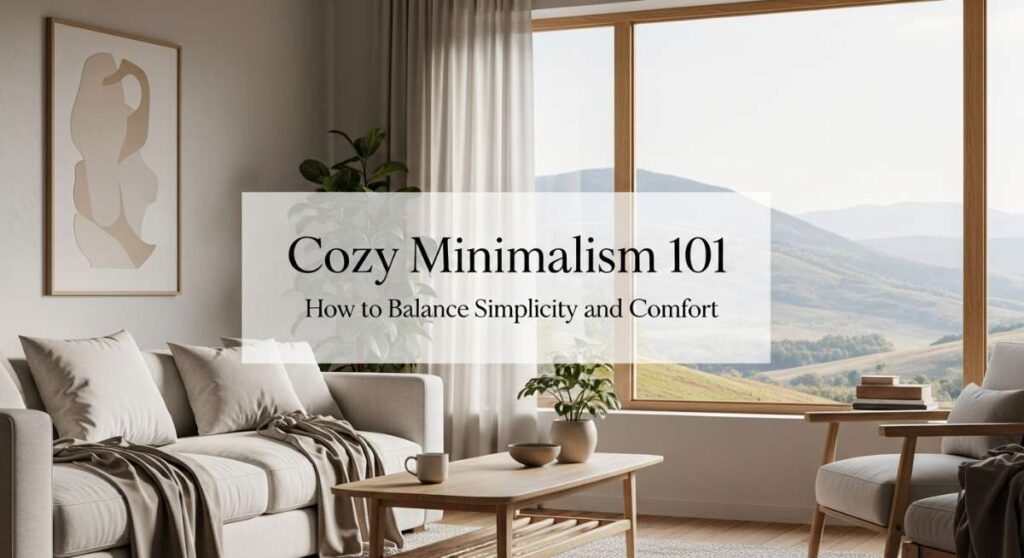
Have you ever walked into a room and felt an instant sense of relief, like a physical weight was lifted off your shoulders? That’s the magic of cozy minimalism. For a long time, we were told that minimalism meant stark white walls, cold surfaces, and living with next to nothing. But let’s be real: most of us want a home that feels like a hug, not a sterile hospital wing. We want the breathing room that comes with fewer belongings, but we also want the softness of a chunky knit blanket and the warmth of a flickering candle.
Cozy minimalism is the art of finding that perfect middle ground—the ‘sweet spot’ where simplicity meets soul. It’s about being intentional with what you bring into your space so that every item has a purpose, whether that purpose is functional or purely emotional. It’s a shift from ‘how much can I fit?’ to ‘how little do I need to feel completely at home?’ Today, I’m walking you through the pillars of this aesthetic so you can transform your house into a serene sanctuary that actually feels lived-in.
How to Create a Cozy Minimalist Living Room for Ultimate Serenity

Why we love this
There is something profoundly healing about a space that prioritizes breathing room without sacrificing the tactile comforts that make us feel safe. Imagine sinking into a soft, oatmeal-colored sofa while the morning sun hits a single, perfectly placed ceramic vase. The absence of visual noise allows your mind to settle, while the interplay of natural wood grains and soft linens provides a sensory richness that keeps the room from feeling empty. It feels like a quiet morning in a forest cabin, where every breath is deep and every movement is intentional.
Essential Elements:
- Neutral color palette (creams, beiges, and soft greys)
- One high-quality statement sofa with deep seating
- Natural wood coffee table with organic edges
- A single, large-scale piece of textured wall art
- Sheer linen curtains to diffuse natural light
How to make it
- Start by clearing the entire room of small decorative objects to establish a ‘visual baseline.’ This allows you to see the architecture and light of the space without distraction.
- Select your anchor piece—usually the sofa—and position it to face the room’s natural focal point, like a fireplace or a window. Ensure there is at least 18 inches of walking space around furniture to maintain ‘flow.’
- Layer in your ‘visual warmth’ by adding a large area rug. Choose a low-pile wool or jute; the visual cue for ‘doneness’ here is when the rug connects all furniture legs, grounding the seating area into a single island of comfort.
- Incorporate three distinct textures: wood (for earthiness), textile (for softness), and ceramic or glass (for shine). This creates a ‘balanced heat’ in the room’s design, ensuring no single element overwhelms the serenity.
How to Style Small Living Room Ideas for an Apartment Cozy Aesthetic
Why we love this
Small apartments often feel like they are closing in on us, but with a cozy minimalist approach, they become intimate jewel boxes of comfort. We love this style because it proves that you don’t need a sprawling floor plan to experience luxury; you just need smart curation. There’s a specific joy in having ‘just enough’—where every square inch is optimized, and the aroma of a single high-quality sandalwood candle can fill the entire space, creating an immediate sense of belonging and peace.
Essential Elements:
- Multi-functional furniture (like a storage ottoman)
- Acrylic or glass nesting tables to maintain sightlines
- Vertical shelving that uses height rather than floor space
- Mirror walls or oversized floor mirrors to bounce light
- Potted tall plants like a Fiddle Leaf Fig for a touch of life
How to make it
- Identify ‘dead zones’ in your apartment and assign them a singular purpose. For example, a corner can become a reading nook with just one chair and a floor lamp, preventing the ‘clutter creep’ common in small layouts.
- Scale your furniture to the room. Avoid ‘overcrowding the pan’—if a piece of furniture touches two walls at once, it’s too large. Aim for a 20% ‘negative space’ ratio on your floor.
- Use ‘tonal layering’ for your textiles. Pick one color, like sage green or soft taupe, and use it in three different shades across your pillows, throws, and rugs. The visual cue is a room that feels expansive yet unified.
- Install floating shelves at eye level. This draws the gaze upward and creates a ‘gallery’ feel without the bulk of a heavy bookcase, keeping the energy of the room light and airy.
How to Design a Minimalist Room for Peaceful Mornings

Why we love this
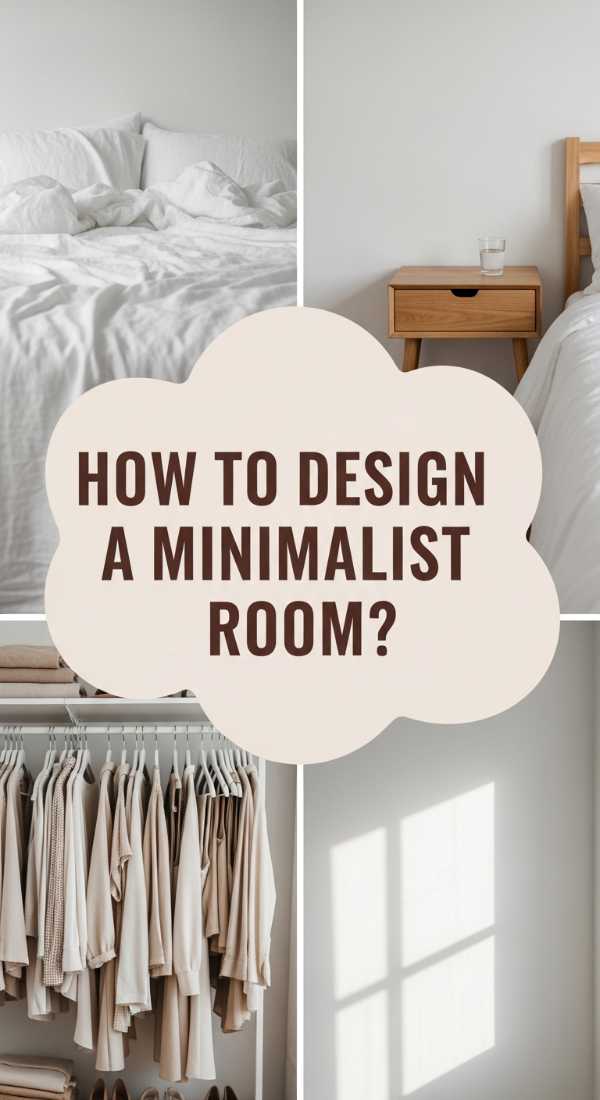
The way we wake up sets the tone for the entire day, and a minimalist bedroom designed for serenity is the ultimate morning gift. We love the crispness of white cotton sheets against a simple wooden frame, creating a backdrop that doesn’t demand anything from you the moment you open your eyes. It’s about the feeling of cool floorboards under your feet and the sight of a clutter-free nightstand holding nothing but a glass of water and your current read, allowing your thoughts to remain clear and focused.
Essential Elements:
- Low-profile platform bed frame
- 100% organic cotton or linen bedding
- Hidden cord management for bedside tech
- Blackout curtains paired with light-filtering sheers
- Soft, dimmable amber lighting
How to make it
- Strip the bed and rethink your layers. Use a ‘base layer’ of high-thread-count sheets, followed by a light duvet. The ‘doneness’ cue here is a bed that looks inviting but not overly ‘stuffed’ with decorative pillows.
- Clear the nightstand of everything except the essentials. Professional tip: Use a small tray to contain items like your glasses or a watch; this ‘zoning’ technique makes even necessary items look like intentional decor.
- Adjust your lighting ‘temperature.’ Replace cool white bulbs with warm-toned LEDs (2700K). This mimics the soft glow of a sunrise and prevents the ‘sterile’ vibe often associated with minimalism.
- Introduce a scent profile. Use a stone diffuser with lavender or cedarwood. The goal is to engage the olfactory senses the moment you wake, anchoring the feeling of peace in your physical environment.
How to Curate Minimalist Room Decor for a Refined Home

Why we love this
Refined minimalism isn’t about having nothing; it’s about having the *right* things. We love this look because it celebrates craftsmanship—the curve of a handmade ceramic bowl, the grain of a solid oak table, or the heavy drape of a high-quality wool throw. It feels sophisticated yet approachable, like a gallery that you’re actually allowed to live in. There is a quiet confidence in a room that doesn’t need to shout with bright colors or trendy patterns to be noticed.
Essential Elements:
- Handcrafted ceramics and pottery
- Solid wood furniture with visible joinery
- Natural stone accents (marble, travertine, or basalt)
- Abstract line art in simple black frames
- Textured wall treatments like lime wash or clay plaster
How to make it
- Audit your current decor and apply the ‘quality over quantity’ filter. If an item doesn’t have a beautiful texture or a meaningful story, remove it.
- Group items in ‘threes.’ Arrange a tall vase, a medium book, and a small candle together. This ‘triangulation’ technique creates visual interest through varying heights while maintaining a clean, organized look.
- Focus on the ‘patina.’ Choose materials that age beautifully, like unlacquered brass or leather. The visual cue for a refined room is that it looks better the more it is used, gaining character over time.
- Maintain a ‘strict palette.’ Limit your accent colors to two muted tones. This ensures that even if you add a new piece of decor, it integrates seamlessly without disrupting the visual ‘quiet.’
How to Arrange a Minimalist Living Room in Small Spaces for Maximum Flow

Why we love this
A well-arranged small space feels like a perfectly choreographed dance. We love the ‘maximum flow’ approach because it eliminates the physical and mental friction of bumping into furniture or navigating tight corners. There is a distinct sense of liberation when a room feels ‘open’ despite its dimensions. It’s about that breezy, light-filled feeling you get when the air can actually move through the space, making your home feel like a sprawling sanctuary regardless of its actual square footage.
Essential Elements:
- Leggy furniture (pieces that sit high off the floor)
- Curved furniture edges to soften the layout
- A consistent flooring material throughout
- Minimalist window treatments that don’t block the frame
- Zoned lighting (overhead, task, and accent)
How to make it
- Map your ‘traffic lanes.’ Ensure there is a clear, unobstructed path from the entrance of the room to the seating and exit points. A width of 36 inches is the professional standard for high-traffic paths.
- Pull furniture away from the walls. Even two inches of ‘breathing room’ behind a sofa creates the illusion of more space and prevents the room from feeling ‘stuck.’
- Use ‘transparent’ pieces. Incorporate a glass coffee table or a mesh chair. The visual cue is that the eye can see through the object to the floor beyond, tricking the brain into perceiving more open space.
- Balance the ‘visual weight.’ If you have a heavy sofa on one side, balance it with two lighter chairs or a tall, slim plant on the other. This prevents the room from feeling ‘lopsided’ or heavy in one corner.
How to Achieve a Minimalist Home for a Clutter Free Lifestyle

Why we love this
A clutter-free lifestyle is the ultimate luxury in our busy, modern world. We love this approach because it transforms the act of cleaning from a chore into a quick ‘reset.’ When every item has a dedicated ‘home’ and the surfaces are clear, the home radiates a sense of order and calm that is infectious. It’s the feeling of walking into a freshly cleaned hotel suite every single day—everything you need is there, and everything you don’t is gone, leaving room for your creativity and rest.
Essential Elements:
- Closed storage solutions (cabinets with doors, not open glass)
- Uniform hangers in closets
- Dedicated ‘drop zones’ near the entryway
- Minimalist kitchen counters with only one appliance visible
- Digital filing systems to eliminate paper trail
How to make it
- Implement the ‘One In, One Out’ rule. For every new item brought into the home, one must leave. This keeps your ‘inventory’ at a manageable level and prevents gradual clutter accumulation.
- Designate ‘hidden zones.’ Use decorative baskets or built-in cabinets to hide ‘necessary clutter’ like remotes, chargers, and mail. The visual cue is a completely clear surface at all times.
- Execute a ‘daily 10-minute sweep.’ At the end of every day, return every item to its designated home. This ‘prep work’ ensures you wake up to a minimalist ‘blank canvas’ every morning.
- Evaluate your ‘visual noise.’ Remove labels from soap dispensers or spices and move them into uniform glass jars. This technical ‘decanting’ step removes the chaotic ‘heat’ of marketing colors from your living environment.
How to Blend Cozy Minimalist Elements for a Warm Sanctuary

Why we love this
Blending the ‘cozy’ with the ‘minimal’ is where the heart of the home truly lives. We love this because it appeals to our primal need for softness and warmth while satisfying our modern desire for order. It’s the contrast of a sleek, modern fireplace against a pile of hand-woven floor cushions, or a sharp-lined dining table softened by a bouquet of dried wildflowers. It feels like a sanctuary—a place where the world slows down and you are surrounded by textures that invite you to stay a little longer.
Essential Elements:
- Sheepskin rugs or high-pile faux fur throws
- A mix of matte and glossy finishes
- Warm metallic accents (gold, copper, or bronze)
- Dried botanicals (pampas grass or eucalyptus)
- Soft, rhythmic patterns like subtle herringbone or pinstripe
How to make it
- Layer your lighting ‘horizontally.’ Place lamps at different heights—eye level, table level, and floor level. This avoids the ‘flatness’ of overhead lighting and creates ‘pockets’ of cozy warmth.
- Mix your ‘hard and soft’ materials. Pair a cold marble countertop with a soft wooden cutting board and a linen tea towel. The cue for ‘doneness’ is when the space feels balanced between ‘structure’ and ‘comfort.’
- Use ‘natural scents’ as a design layer. Simmer cinnamon and orange peel on the stove. This ‘invisible decor’ adds a layer of coziness that doesn’t take up any physical space, maintaining the minimalist ethos.
- Introduce ‘organic shapes.’ Swap a rectangular mirror for a round or asymmetrical one. This breaks up the ‘grid’ of a minimalist room, making it feel more like a natural sanctuary and less like an office.
How to Master Decor Minimalist Styles for a Gallery Like Feel

Why we love this
There is a sophisticated thrill in treating your home like a curated gallery. We love this style because it forces you to appreciate the beauty in the singular. Instead of a wall of messy photos, you have one breathtaking landscape. Instead of a shelf full of knick-knacks, you have one sculpture that catches the light just right. It creates an atmosphere of ‘intentionality’ and respect for art, making your everyday life feel more elevated and inspired.
Essential Elements:
- Oversized, matted artwork
- Directional spotlighting or ‘picture lights’
- Pedestals or dedicated ‘plinths’ for sculpture
- Minimalist furniture with ‘sculptural’ silhouettes
- A monochromatic color scheme (all whites or all blacks)
How to make it
- Select your ‘hero’ piece. This should be the largest and most visually striking item in the room. Give it a ‘halo’ of at least 3 feet of empty wall space to emphasize its importance.
- Apply ‘intentional lighting.’ Use adjustable spotlights to aim light directly at your art pieces. This ‘focusing’ technique creates dramatic shadows and highlights, typical of professional galleries.
- Limit the ‘visual rhythm.’ Choose frames that are all the same color and material. This ensures that the art is the focus, not the ‘packaging’ around it.
- Incorporate ‘negative space’ as a deliberate design element. Don’t feel the need to fill every corner. The visual cue for a gallery-like feel is when the empty spaces feel as ‘heavy’ and important as the objects themselves.
How to Maintain a Minimalist Cozy Vibe for Daily Comfort

Why we love this
Maintenance is the secret ingredient to long-term cozy minimalism. We love this phase because it’s about the ‘ritual’ of care. It’s the feeling of smoothing out the duvet every morning, the smell of fresh cedar wood polish, and the sight of a perfectly organized pantry. This isn’t about perfection; it’s about the comfort that comes from knowing your space is always ready to support you, rather than demanding your energy to manage it.
Essential Elements:
- High-quality cleaning tools that are beautiful to look at
- A ‘reset’ basket for items that belong in other rooms
- Natural wood and stone conditioners
- Linen sprays for a fresh sensory experience
- Minimalist storage bins for the inside of cabinets
How to make it
- Establish a ‘closing shift’ routine. Spend 5 minutes every night fluffing cushions and clearing the coffee table. This ‘prep’ ensures that your minimalist ‘doneness’ is preserved for the following morning.
- Condition your natural materials. Once a month, oil your wood furniture and leather items. This technical maintenance keeps the ‘cozy’ factor high by ensuring materials stay soft and supple.
- Audit your ‘sensory inputs.’ Periodically check that your home still smells and sounds the way you want. Adjust your music playlists and candle scents to match the season.
- Practice ‘low-heat’ living. Keep your home at a comfortable temperature and use physical layers (throws) for extra warmth. This creates a ‘nesting’ environment that reinforces the cozy minimalist vibe.
How to Transform a Living Room Decor Minimalist Setup for Relaxed Evenings
[IMAGE_10]
Why we love this
As the sun goes down, a minimalist room transforms into a cocoon of relaxation. We love the way shadows play across clean surfaces and how the lack of clutter allows the mind to finally unplug from the day’s digital noise. There’s a specific, lush feeling to sitting in a dimly lit, minimalist room with a warm cup of tea—the simplicity of the environment heightens your other senses, making the taste of the tea more vivid and the softness of the chair more comforting.
Essential Elements:
- Floor lamps with ‘warm’ fabric shades
- A collection of real beeswax or soy candles
- Low-interference sound system for ambient music
- A single, high-quality wool or cashmere throw
- Soft, textured floor cushions for extra seating
How to make it
- Transition your lighting. Turn off all ‘cool’ overhead lights and switch to ‘low-level’ lamps and candles. The visual cue is a room where the corners disappear into soft shadows, focusing all ‘heat’ on the seating area.
- Prepare your ‘sensory station.’ Set out a tray with your evening tea and a book. By keeping the rest of the room clear, this ‘active’ area becomes a sanctuary within a sanctuary.
- Engage ‘ambient sound.’ Use a white noise machine or a playlist of soft jazz. The goal is to create a ‘wall of sound’ that blocks out the external world, reinforcing the minimalist ‘bubble.’
- Limit tech ‘visuals.’ Cover the TV screen with a beautiful textile or hide remotes in a box. Removing the ‘black mirror’ of the TV screen is the final step in achieving a truly relaxed, cozy minimalist evening.
Conclusion: Embracing the Less is More Philosophy
Cozy minimalism isn’t a destination; it’s a way of living that prioritizes your well-being over your ‘stuff.’ By balancing the clean lines of minimalism with the soft textures of a cozy home, you create a space that doesn’t just look good on camera—it feels good to live in. Remember, your home should be a reflection of who you are and a tool that helps you live your best, most focused life. Start small, be intentional, and enjoy the peace that comes with a beautifully curated, cozy minimalist home.